
Aloha Camp > Activities > Critter hunting in Mānoa Stream
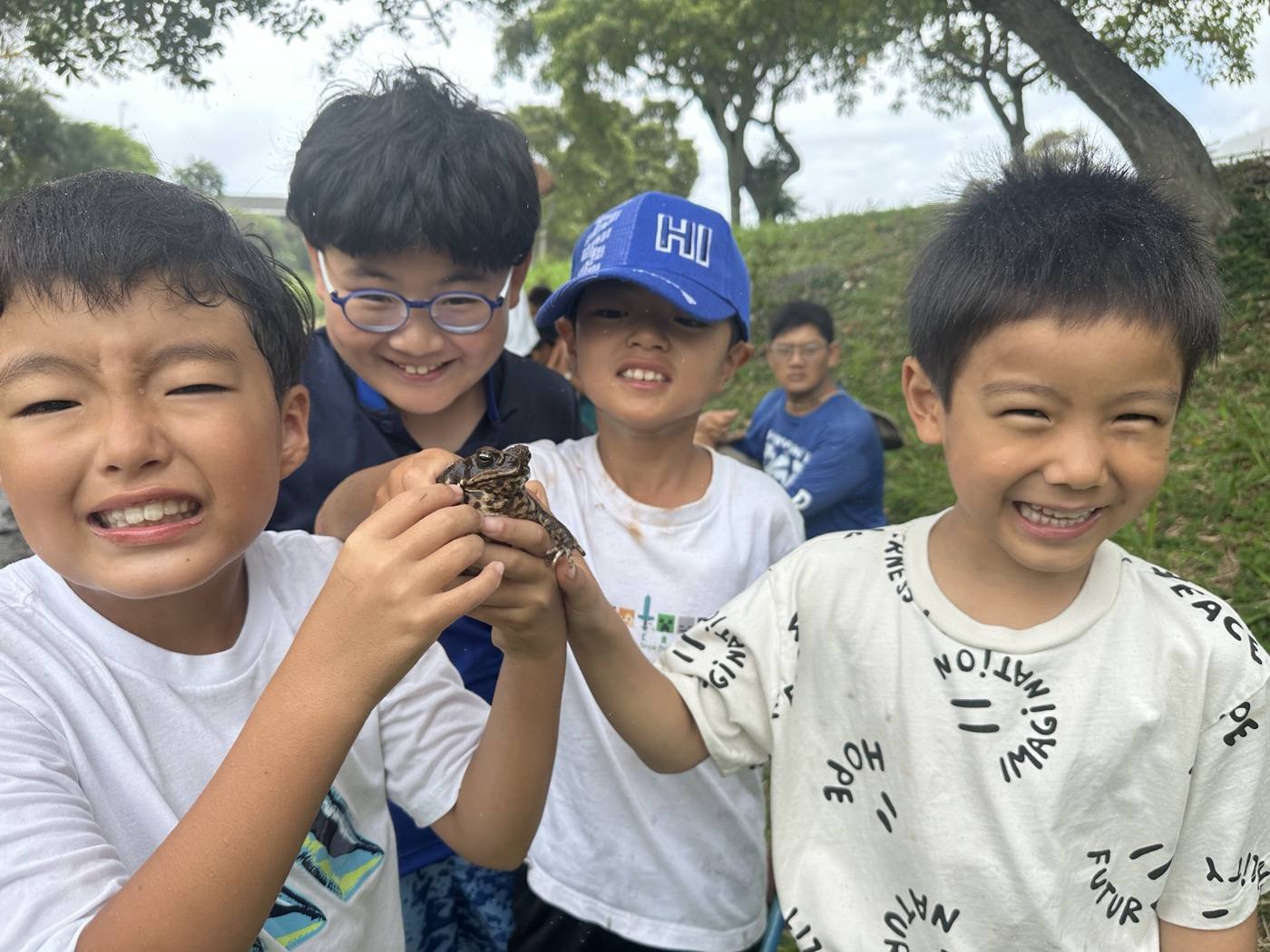
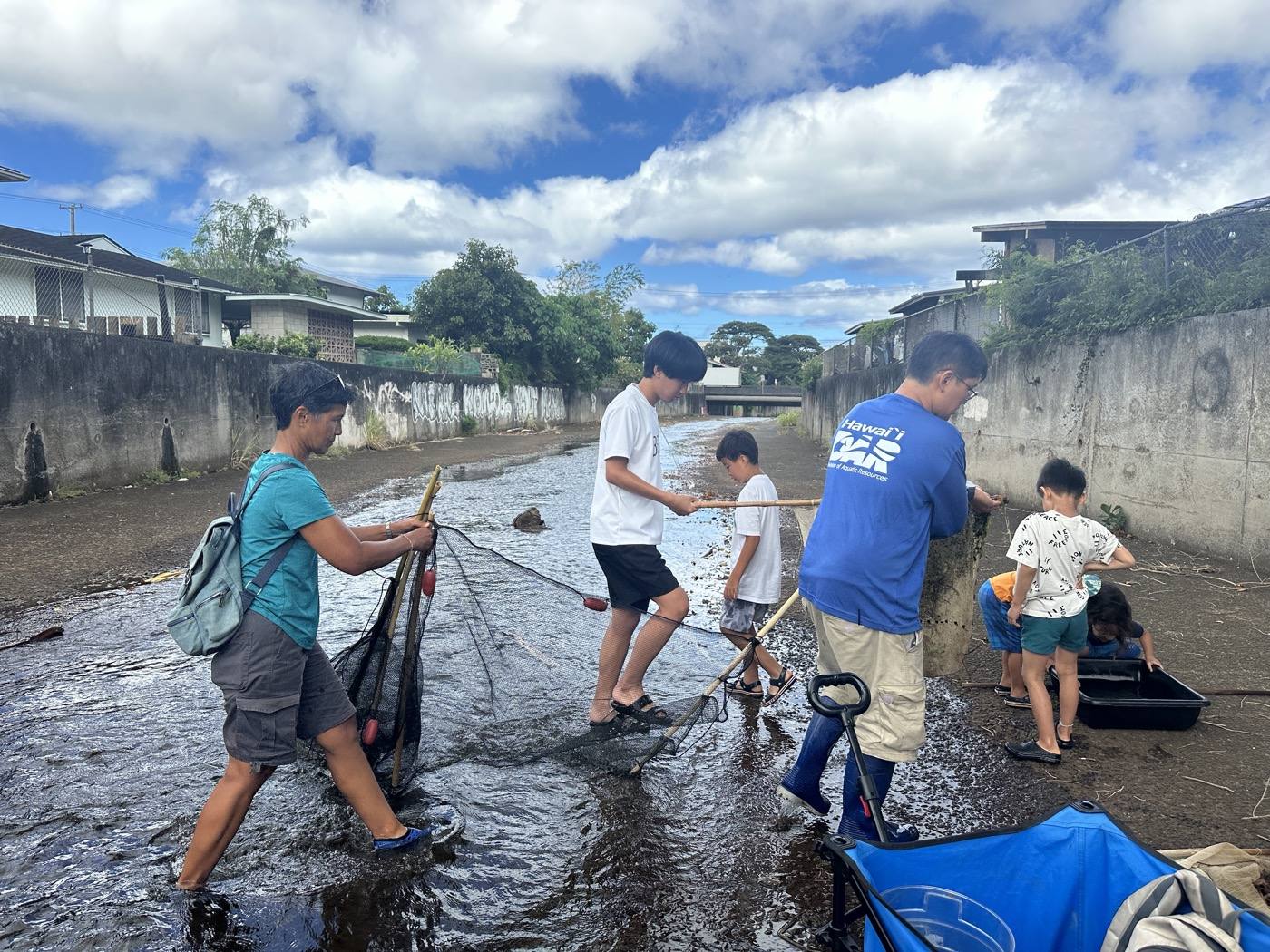
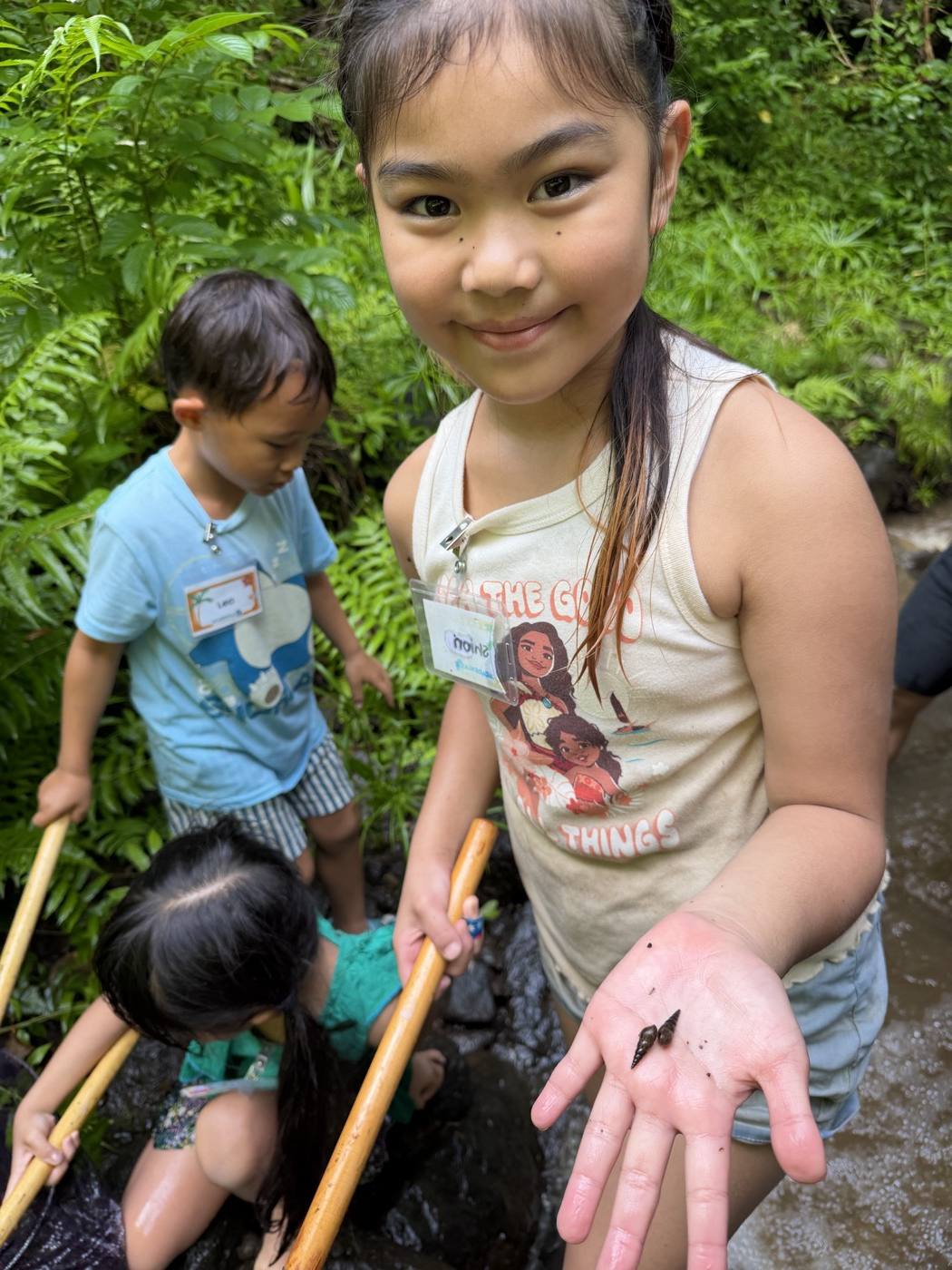
Critter hunting in Mānoa Stream
Stream Exploring in Mānoa
We head to a stream that runs through Mānoa Valley. With nets and buckets, we step into the water and gently peek under rocks and into the shade of the grass. Tiny shrimp, small fish, crayfish. We spend the morning figuring out together what the critters we find are called in English. It’s a state program, run together with staff from the State of Hawaiʻi.
At a glance
- How to join
- Everyone at camp that day goes together.No reservation needed. Nets, buckets, and other gear are provided (no extra cost).
- Ages
- Kids Program (ages 6–12) and Junior Program (ages 13–18)On morning field trips, Kids and Junior go together.
- Location
- Mānoa StreamWe travel there by bus from school.
- Time
- Morning (leave school → stream → lunch at a park)In the afternoon, Kids do one more activity somewhere else and then have English time in the classroom; Junior students have English classes in the classroom.
- What to bring
- Clothes that can get wet, water sandals or water shoes, a change of clothes, towel, hat, sunscreen, water bottleFeet will get wet. Younger children should bring a change of clothes. We’ll send details in advance.
- Rainy days
- This is an outdoor activity.If rain has raised the stream’s water level, we go somewhere else.
A day like this
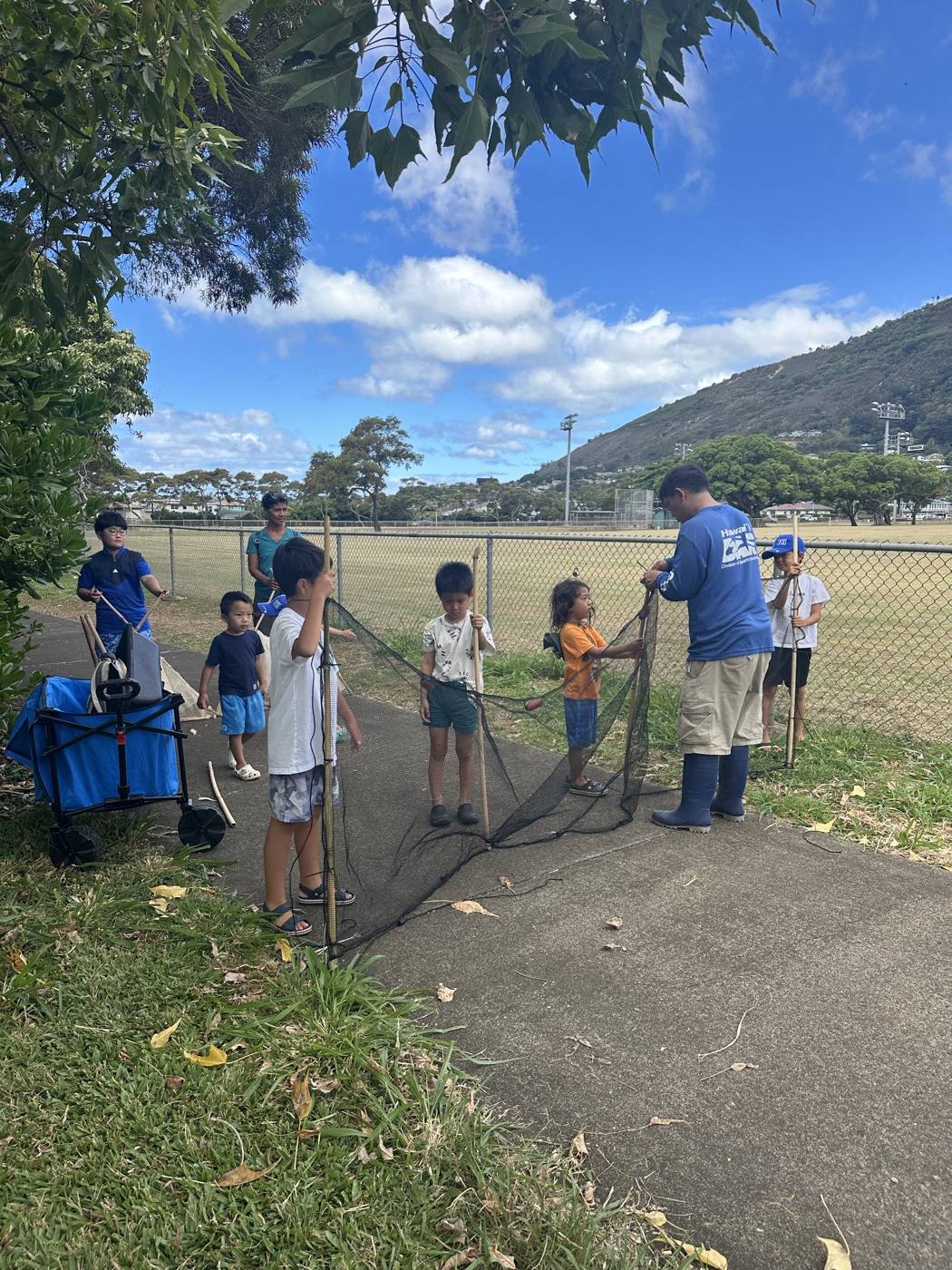
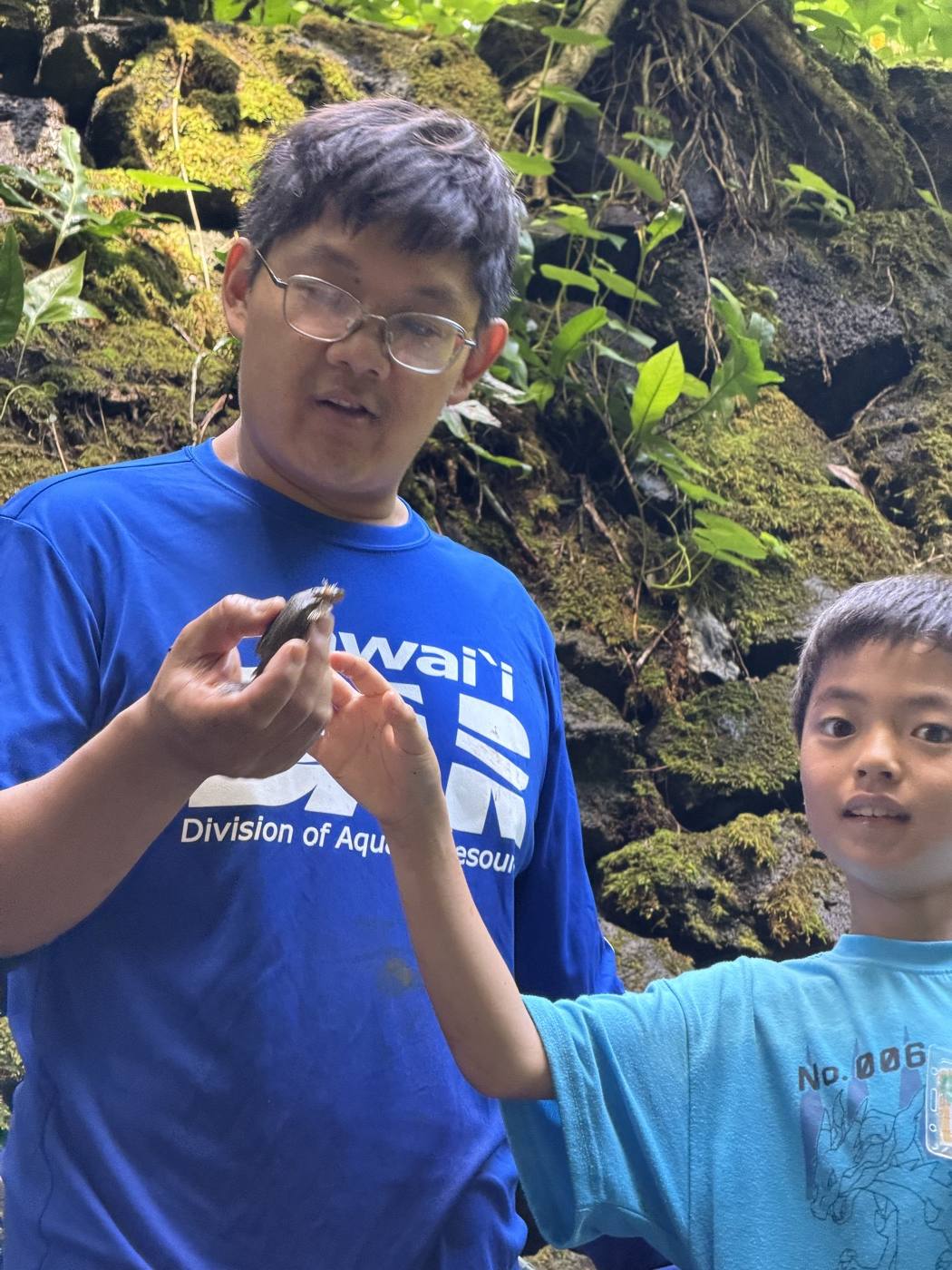
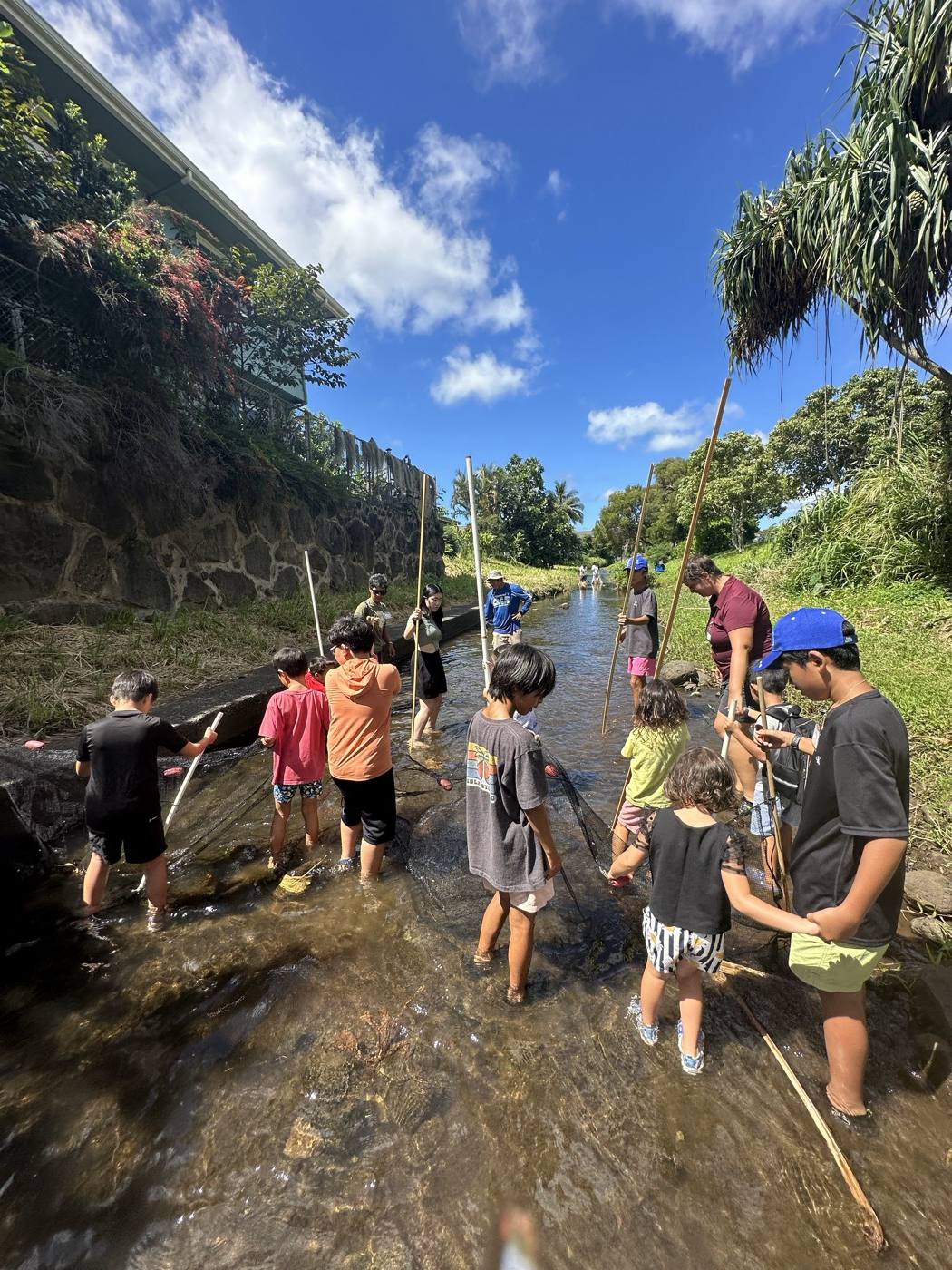
Off to the stream with nets and buckets
At the stream, we first learn how to use the nets and go over the rules for being in the stream. Staff from the State of Hawaiʻi’s DLNR Division of Aquatic Resources show us how to find critters. Starting in the shallows, we gently step into the water.
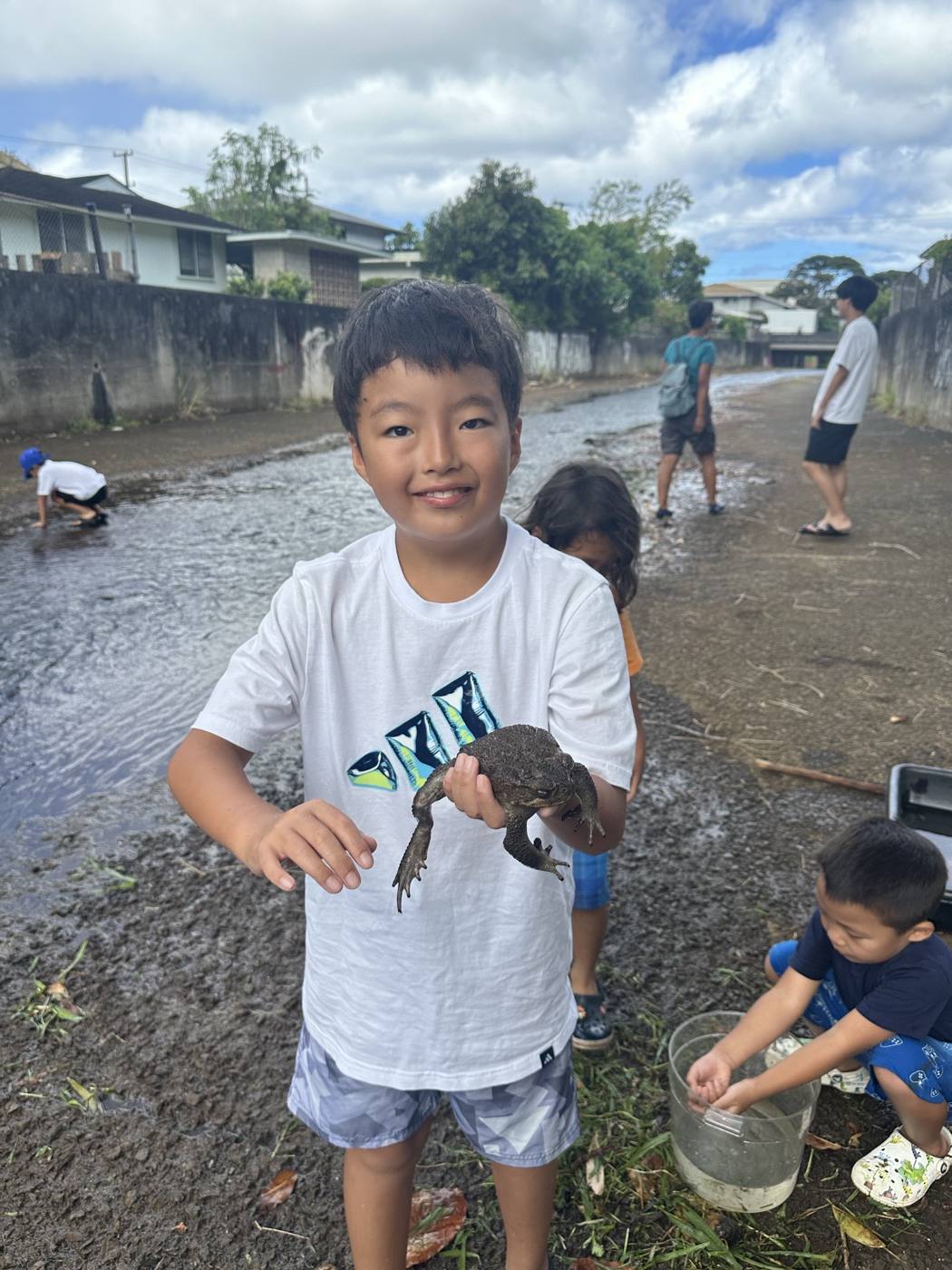
Gently peeking under rocks
We flip over rocks and sweep our nets through the shade of the grass. Calling out “Here! Here!” to each other, we chase after the critters.
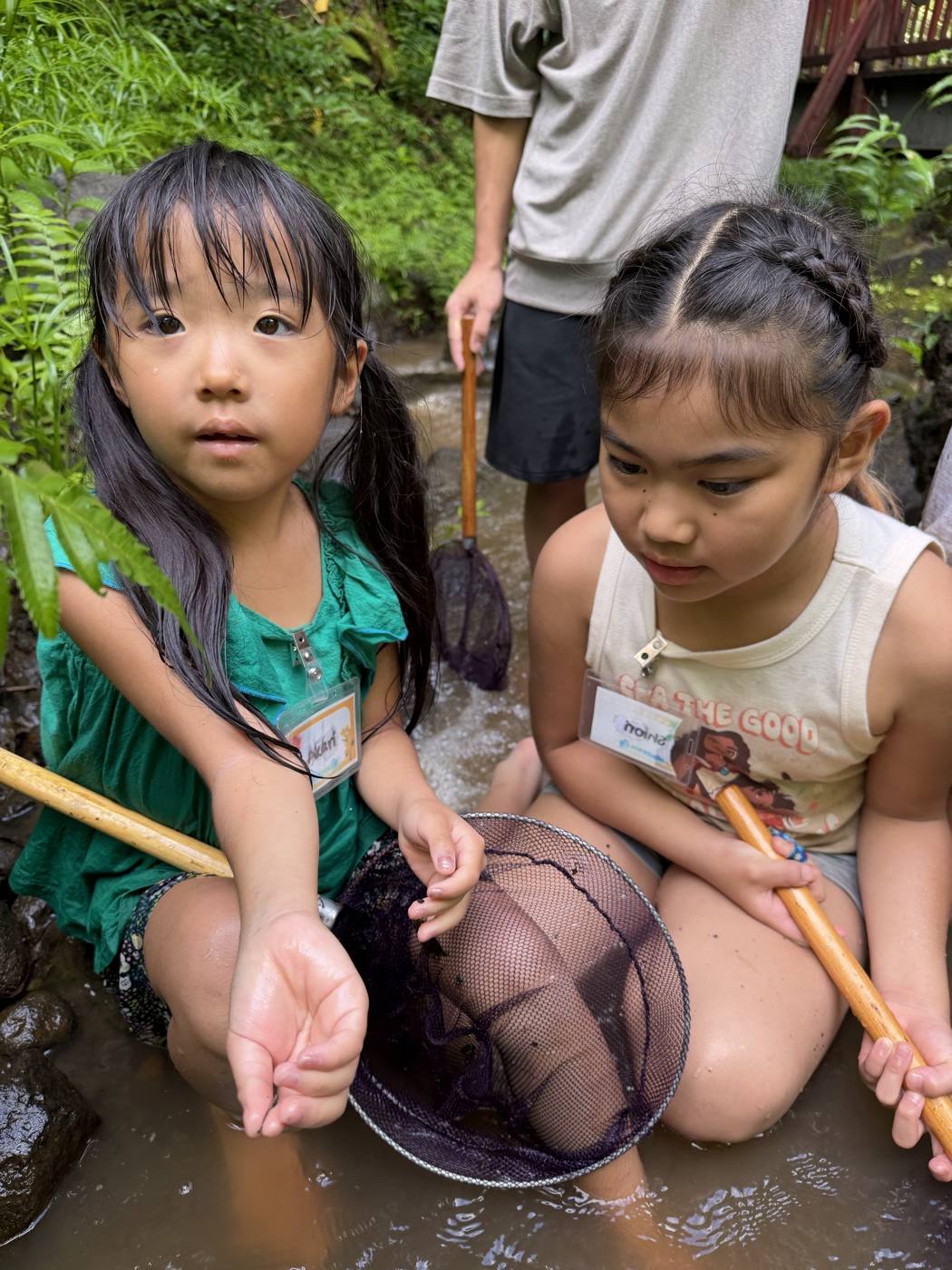
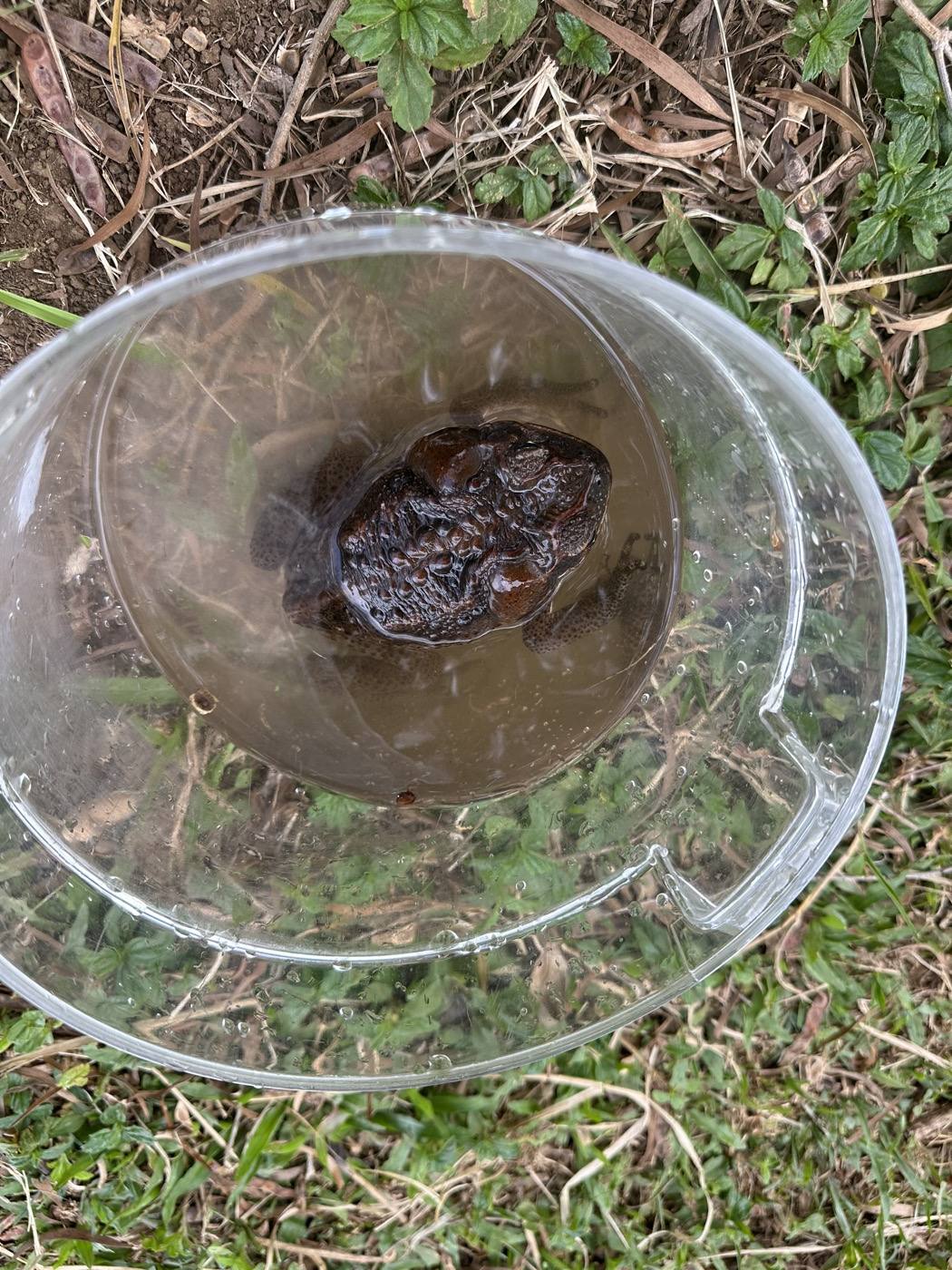
Found one! Everyone takes a look
Once we catch something, we put it in a clear container and take a close look. Together, we talk about what it is and where it lives.
Lunch at the park, then playground time
After the stream, we have lunch at a nearby park. Once we’ve eaten, it’s time to play hard on the playground. Kids spend the last hour or so in the classroom, looking back on the critters they found by talking about them in English or writing in their journals. Junior students return to school for level-based English classes and a group lesson just for camp students.
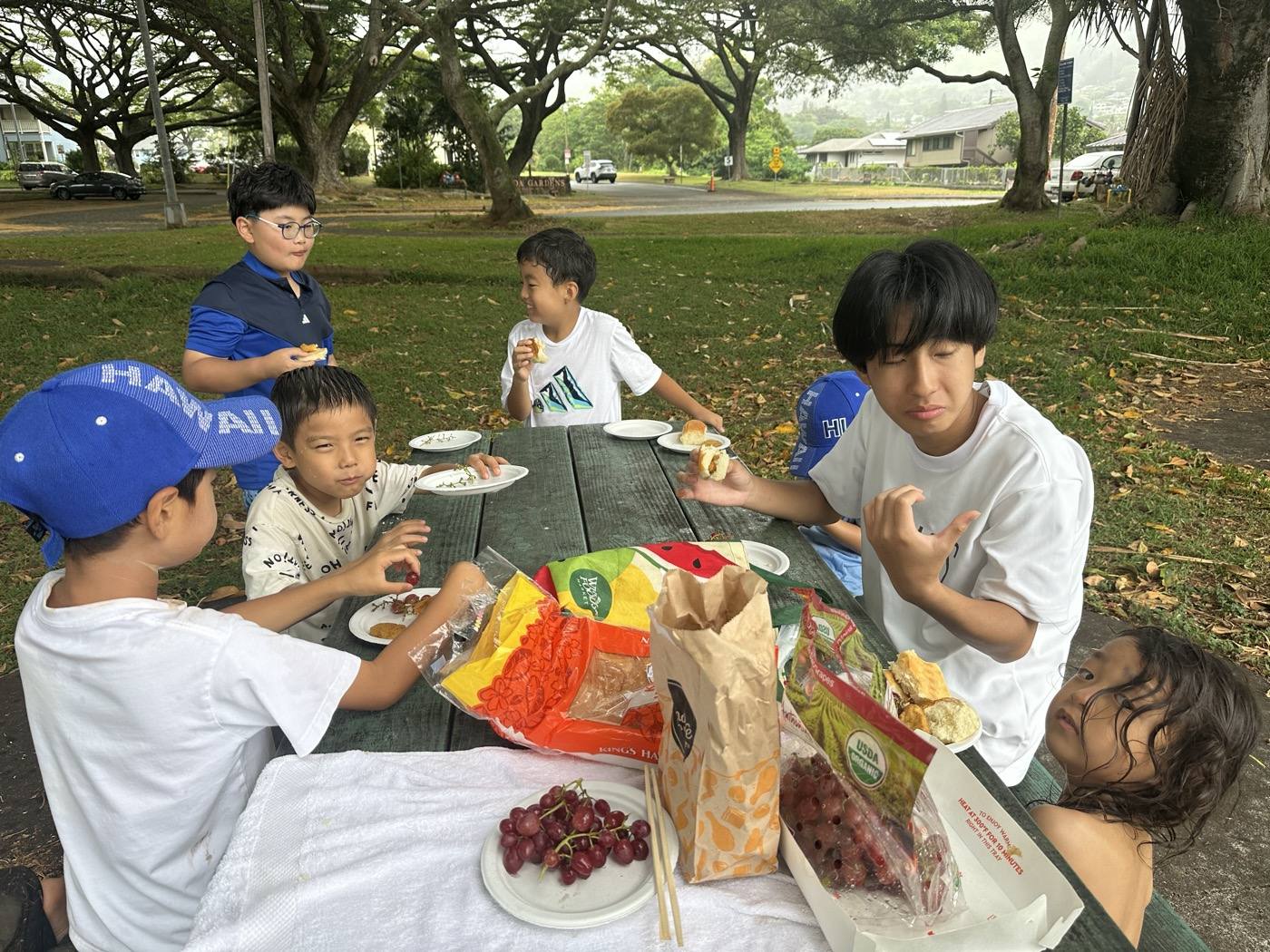
Let’s try saying it in English on the day
Photos
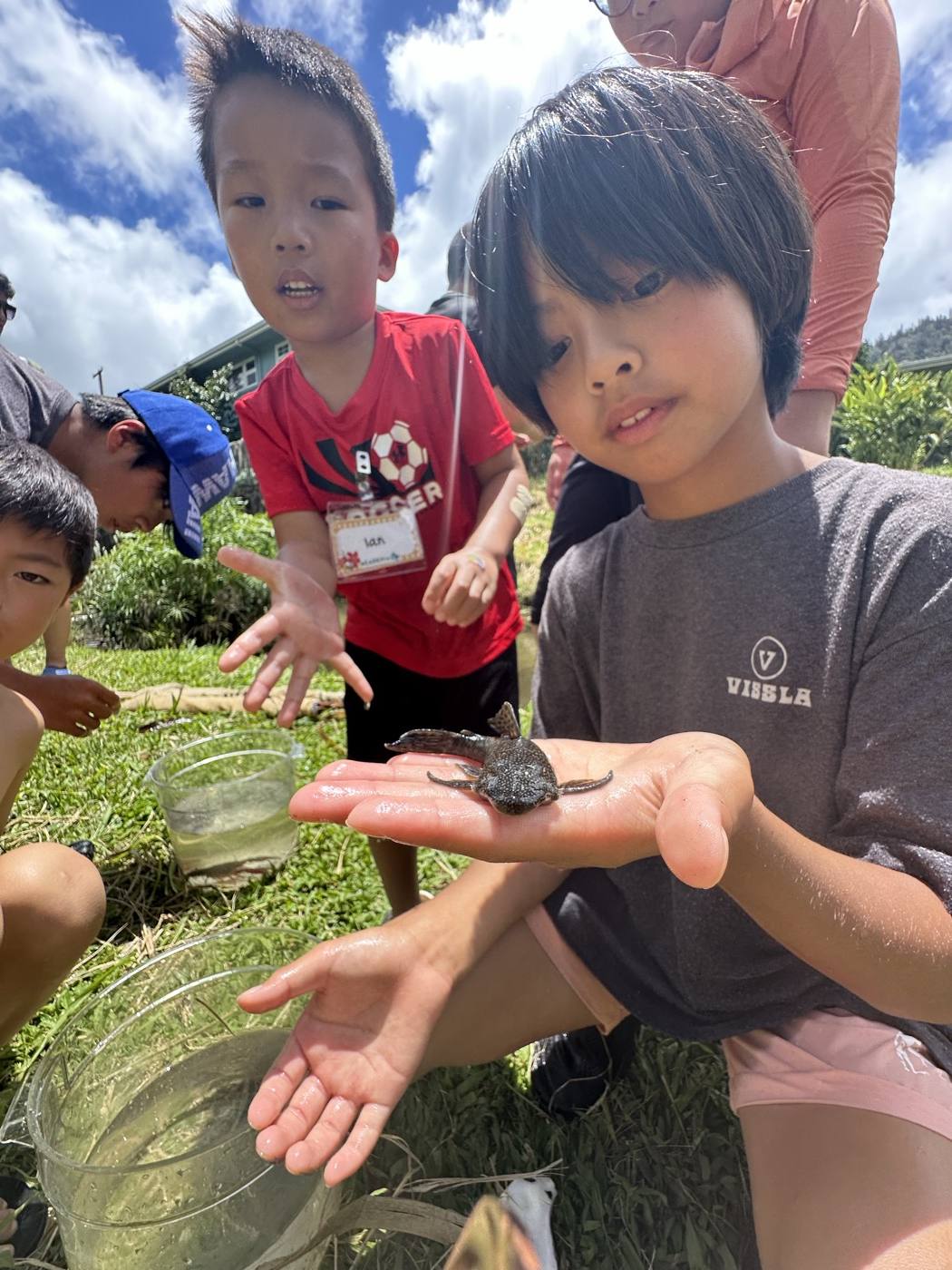
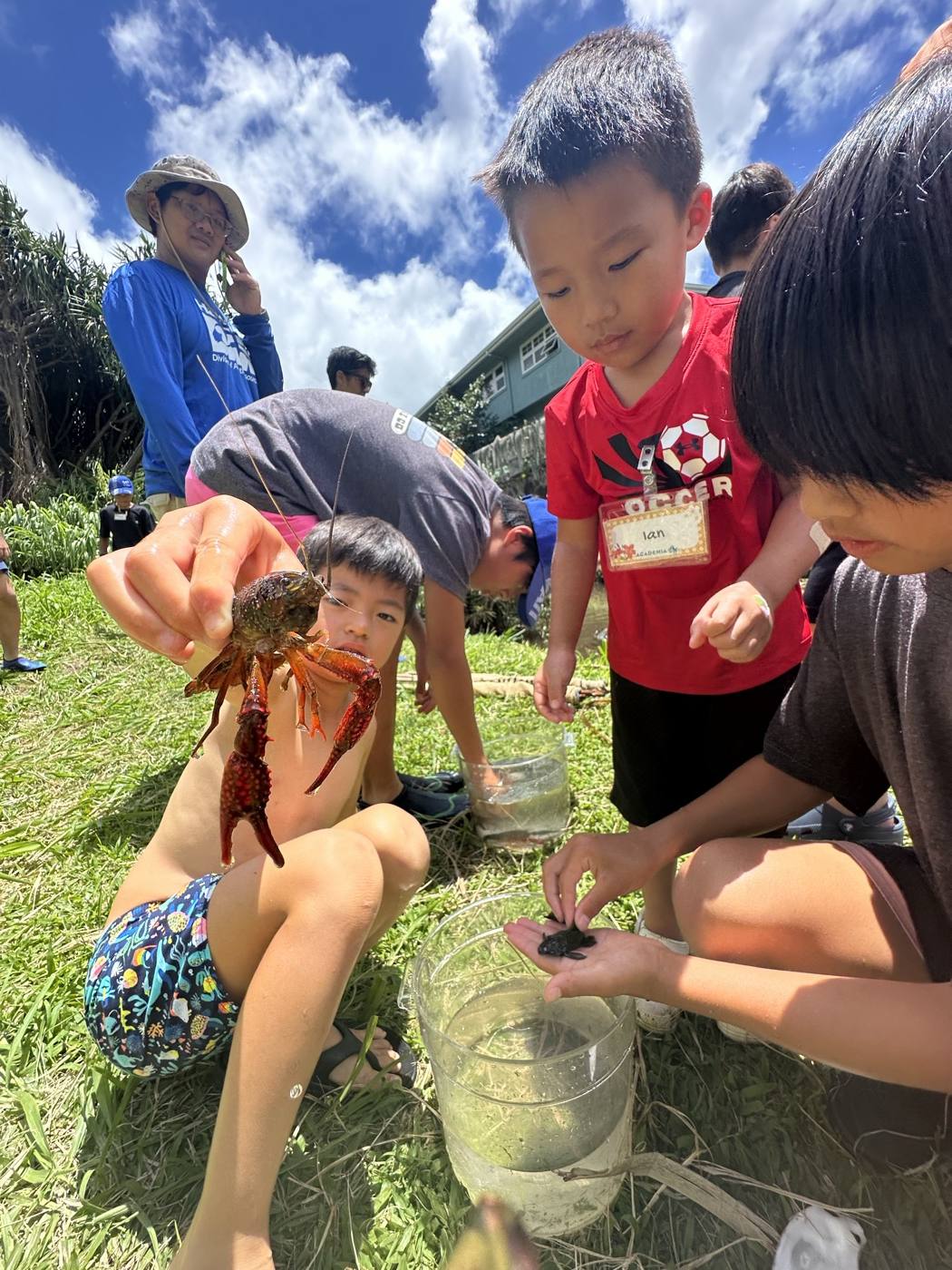
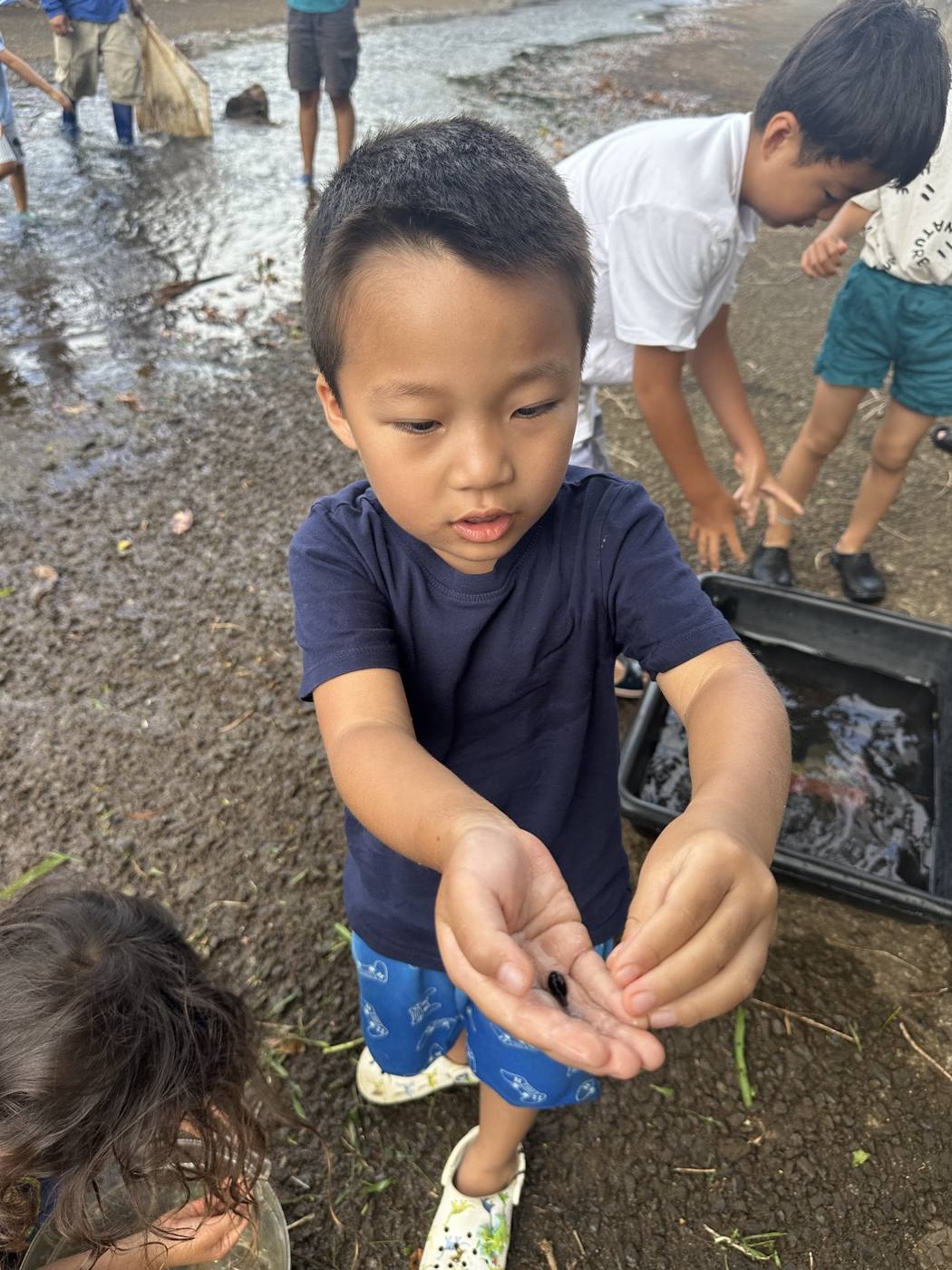
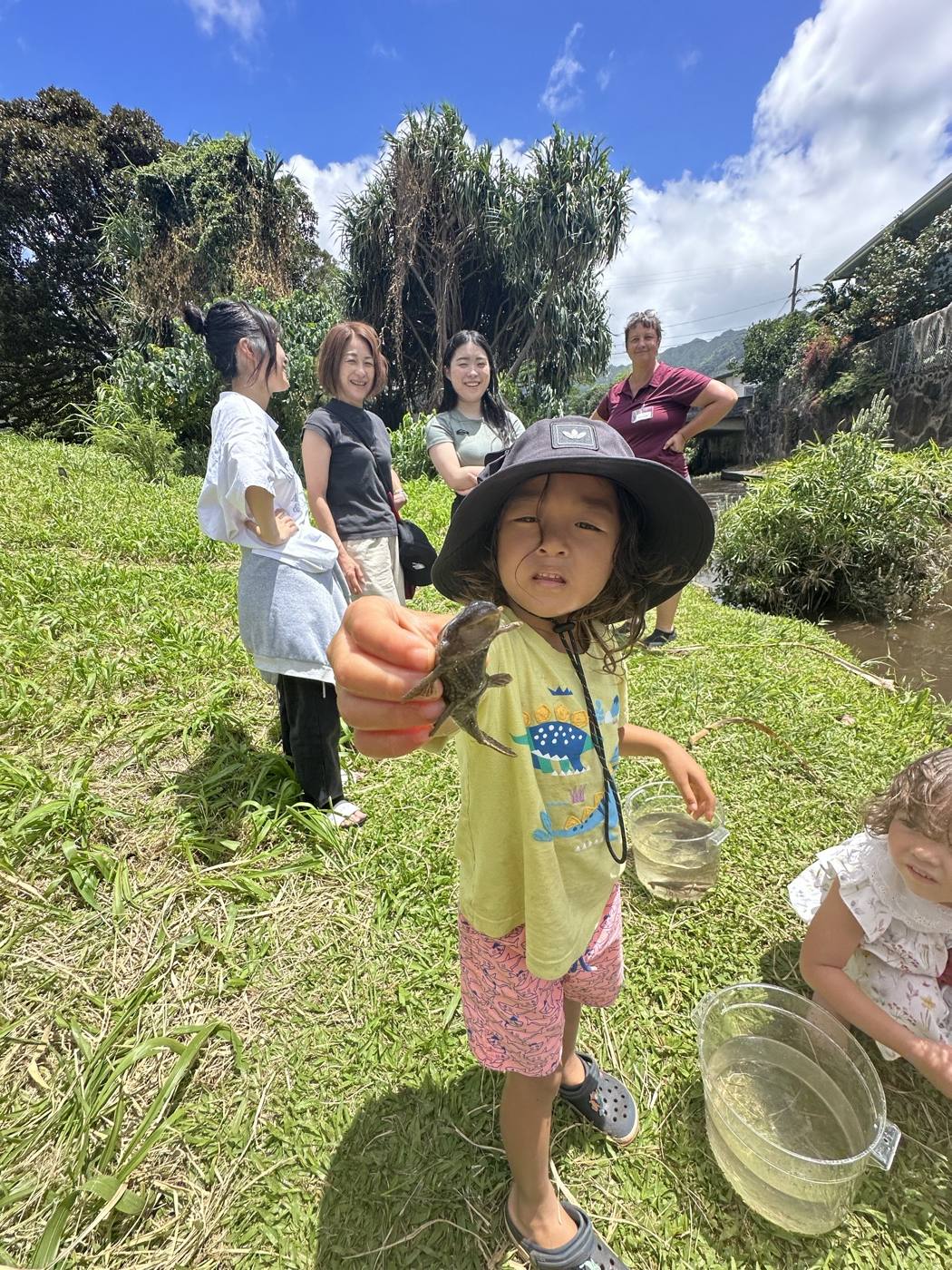
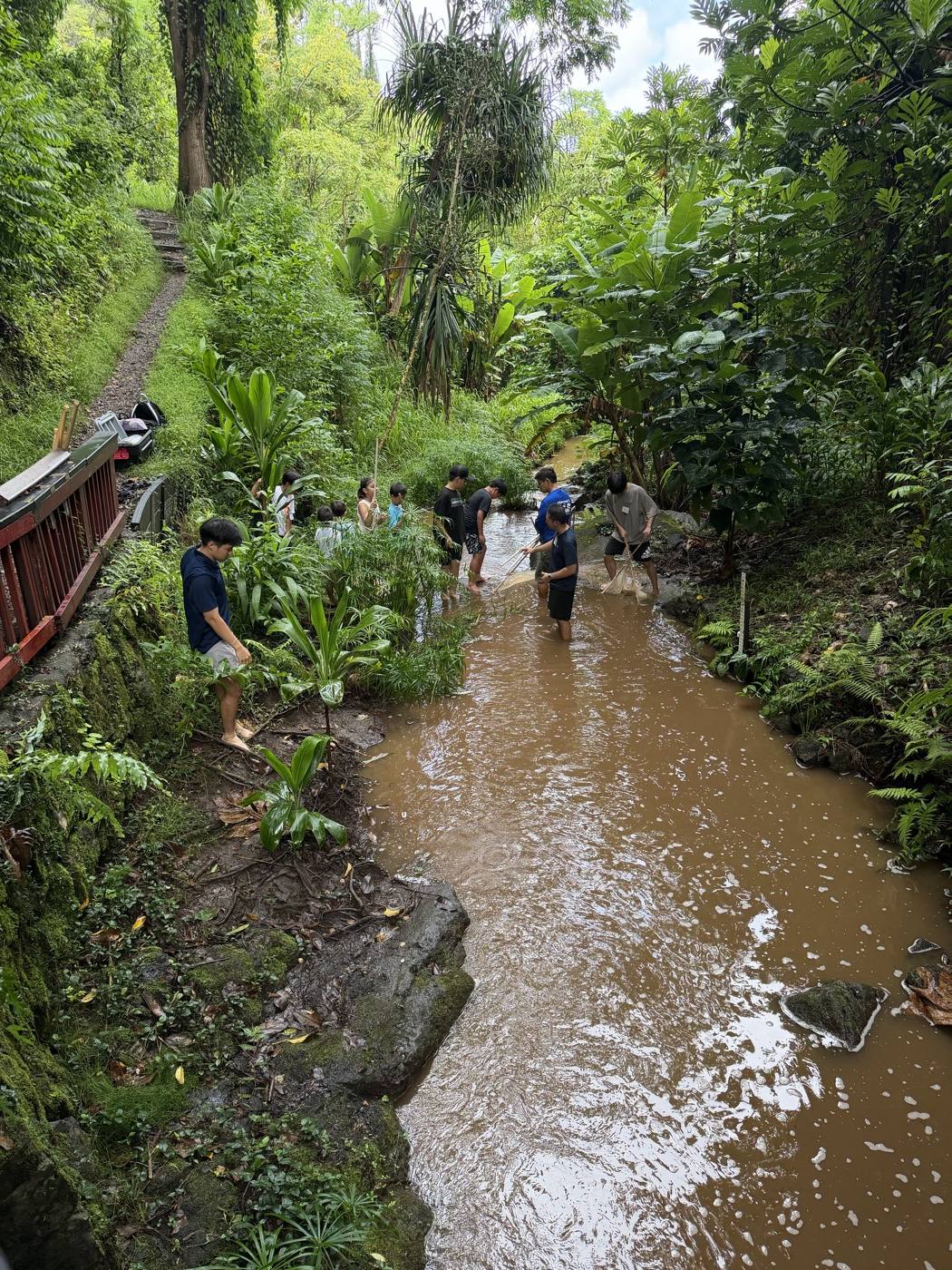
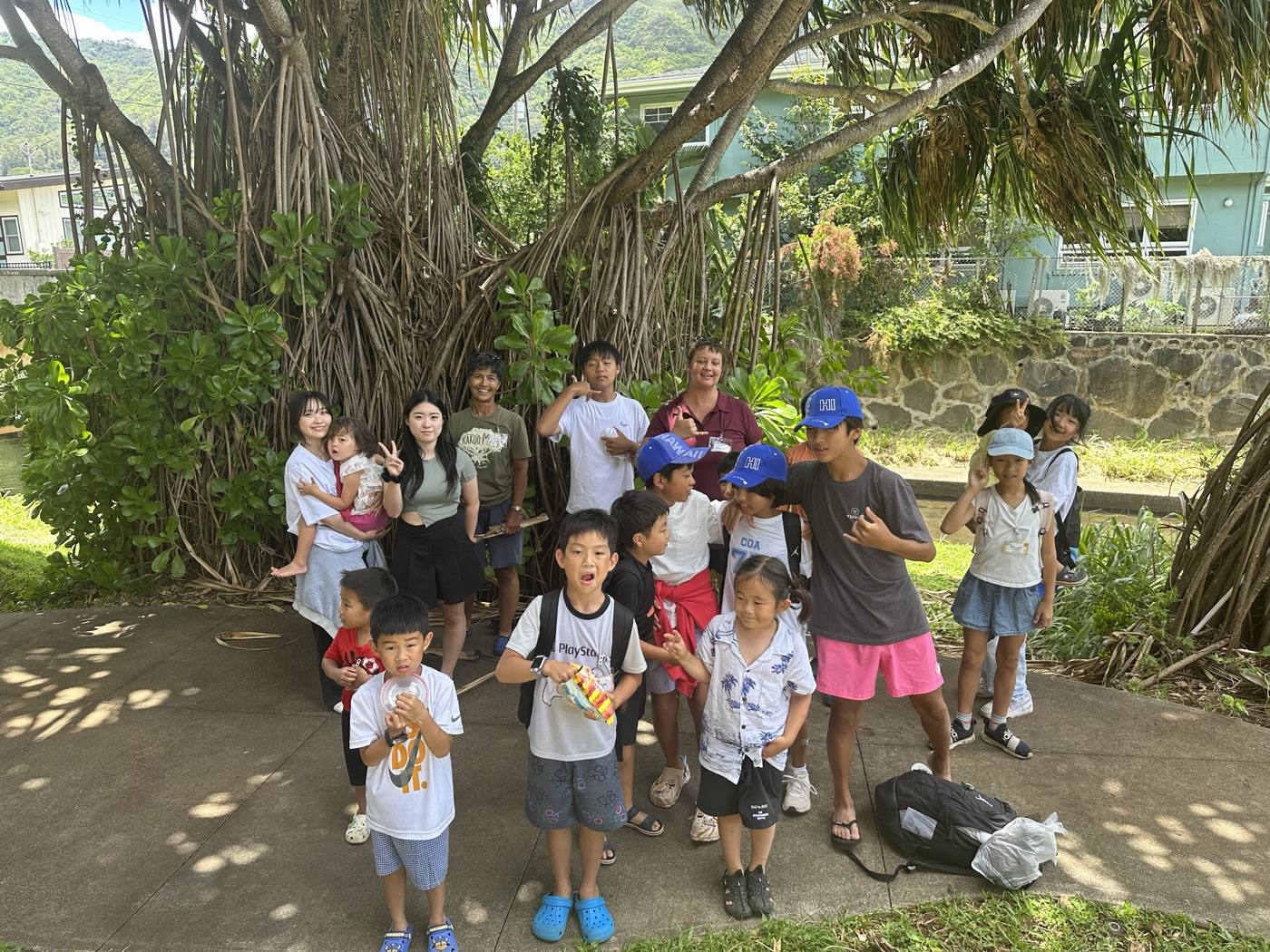
Taken at Aloha Camp in Summer 2025, Spring 2026, and Summer 2026
For kids, for parents
For kids
The feel of cold water, little fish darting away, the thrill when something lands in your net. The stream is full of things you can’t learn from a field guide.
For parents
When you catch a critter with your own hands, you want to know its name. Kids learn the English names of living things along with the experience.
- When kids are in the stream, state staff and teachers stay close by. If the water is high after rain, we don’t go into the stream.
- Destinations and activities may change depending on the weather.
Seasons with this activity
We visited twice in Summer 2025
August 1 and August 13, 2025
We also visited in summer 2026
Week 3 (August 4)
We’ll announce spring and summer destinations as soon as they’re set
The spring session runs March 22 – April 2, and the summer session runs July 19 – August 20.
Videos
Other activities
Join Aloha Camp
A program in Hawaiʻi where kids ages 6 to 18 learn English during spring break (March) and summer break (July–August). Mornings are field trips, and afternoons are age-appropriate activities and English classes, so kids learn English while having fun.