Is the F-1 "Four-Year Rule" in Effect? D/S Status in 2026
academia-admin
Academia Language School

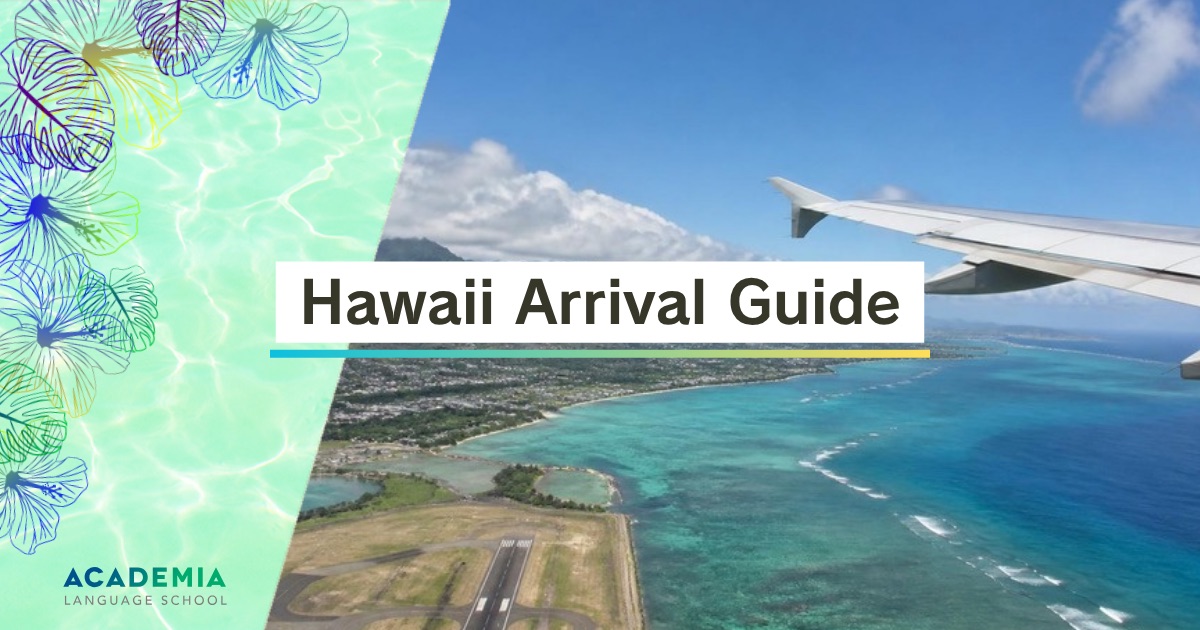
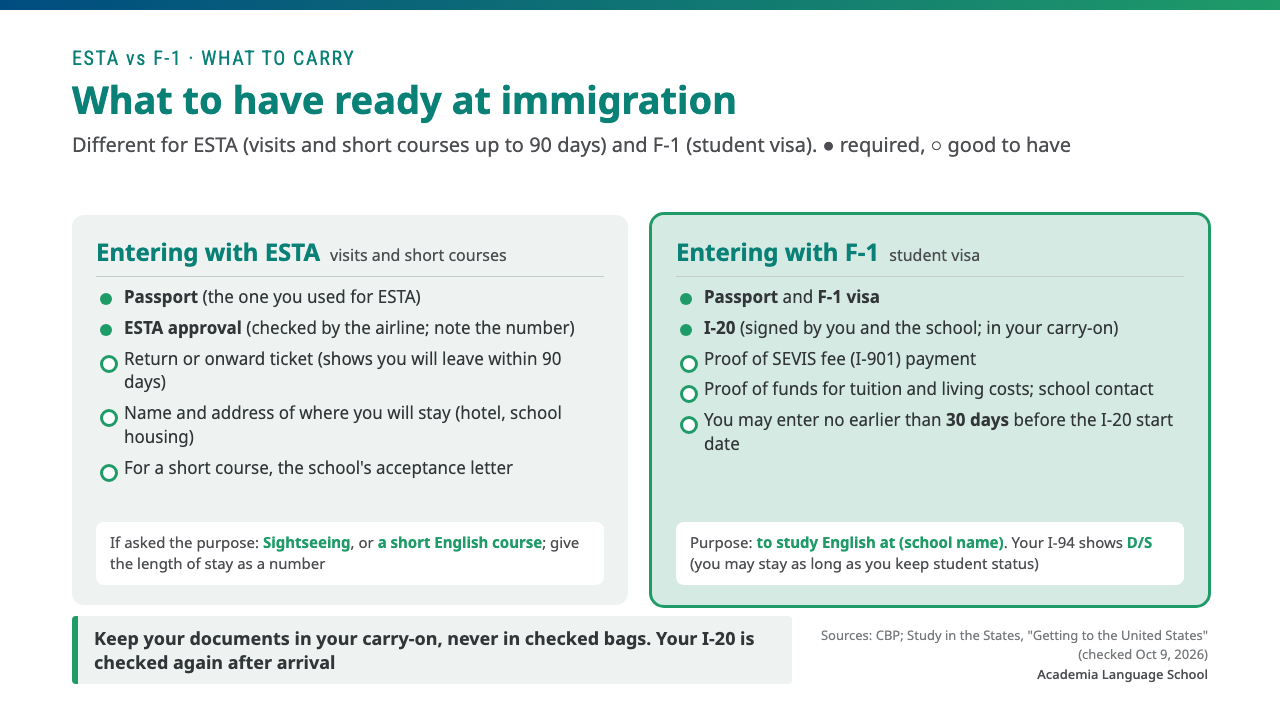
To enter Hawaii, you need a valid passport plus either ESTA (for a visit or short course of up to 90 days, if your passport is from a Visa Waiver Program country) or an F-1 visa with an I-20 (for full-time study at a language school). At immigration, the officer mainly asks about your purpose, length of stay and where you will stay, and short answers are all that is needed. Three things changed in 2026: the ESTA fee rose from $21 to $40.27 (and becomes $40.62 on October 16, 2026), the MPC app, which shortens the inspection, is available at Honolulu Airport, and the arrival record (I-94) is no longer issued on paper. In this article, the Academia editorial team walks through the documents you need, what happens at Honolulu Airport on the day, how to answer the questions in English, and what is different when you enter on an F-1 visa, based on guidance from U.S. Customs and Border Protection (CBP) and the Department of Homeland Security (as of October 9, 2026).
Written by the Academia Editorial Team / Supervised by Yamahi (School Owner, Academia Language School)
The answer is a valid passport and either ESTA or an F-1 visa. Which one depends on the purpose and length of your stay.
As a general rule, the United States asks that your passport be valid for six months beyond your planned stay. Passports from many countries are exempt from this six-month rule and only need to be valid through your departure date; check the rule for your country with the U.S. embassy or consulate before you book. Either way, traveling on a passport with at least six months of validity is the safe choice, since airlines, transit countries and any extension of your stay may require it. If you renew your passport, you must apply for a new ESTA with the new passport, because ESTA is tied to the passport number.
If your passport is from one of the countries in the Visa Waiver Program (VWP), you can enter for tourism, business or a short language course for up to 90 days with ESTA instead of a visa. ESTA is valid for two years (or until your passport expires) and can be used for multiple trips. Apply only on the official website (esta.cbp.dhs.gov) and avoid third-party sites. CBP recommends applying as early as possible, ideally before you buy your ticket. If your country is not in the VWP, you will need a visitor (B-2) visa from a U.S. embassy or consulate for a visit or short course; the questions at the airport are the same.
A short English course can be taken with ESTA only if it is less than a full course of study (for a language school, the F-1 threshold is 18 clock hours a week or more). Longer or more intensive study requires an F-1 visa. If the school offers an ESTA-friendly course, bring the acceptance letter; it makes it easier to explain your purpose and where you will stay.
The school issues a Form I-20 (Certificate of Eligibility), you apply for an F-1 visa at a U.S. embassy or consulate, and you enter with three documents: your passport, the visa and the I-20. The differences when entering on an F-1 visa are explained later in this article.

The two ESTA problems I see most often are paying several times the fee on a third-party site, and arriving at the airport with an old ESTA after renewing a passport. ESTA costs a little over $40 on the official site. Apply the day you book your flight, not the day before you leave.
At Daniel K. Inouye International Airport (Honolulu), the order is 1. agricultural declaration form on the plane, 2. immigration inspection, 3. baggage claim, 4. customs and agriculture check. How long it takes depends on how busy the flight is, but once you know the sequence you will not get lost.
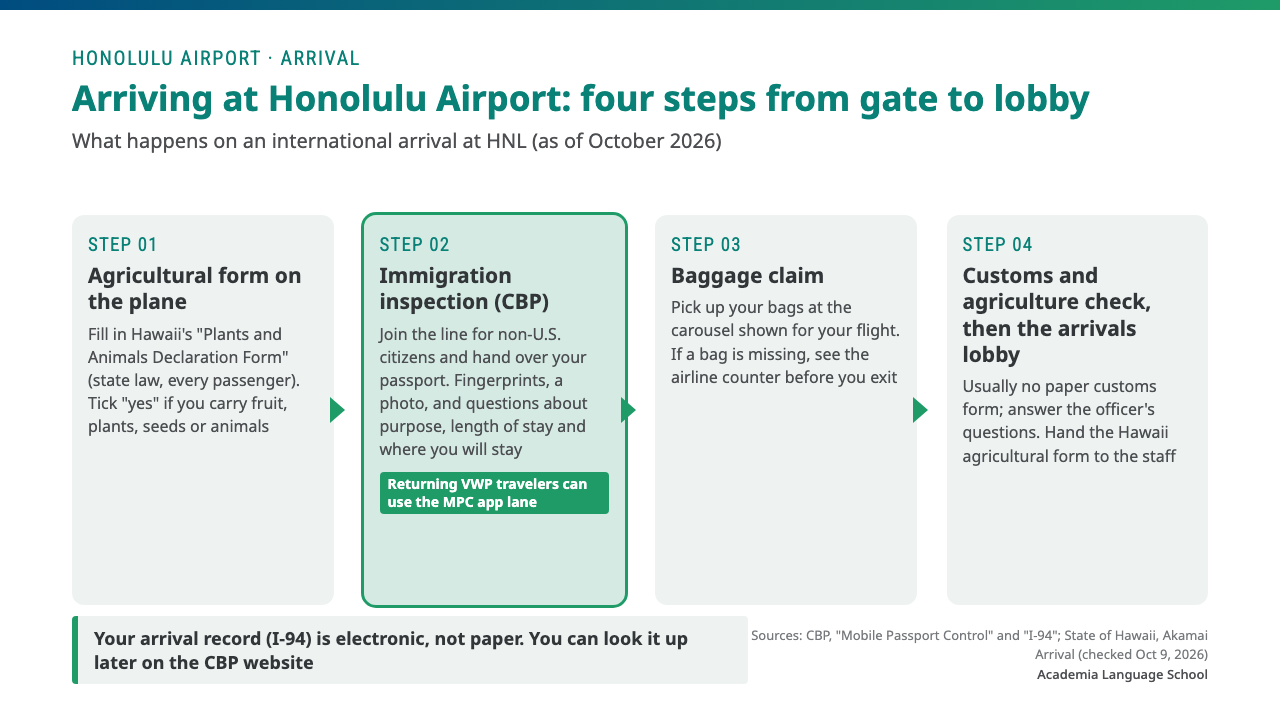
Under Hawaii state law, every passenger arriving in Hawaii must submit the Plants and Animals Declaration Form. It is a one-page form handed out on the plane that asks whether you are carrying fruit, vegetables, plants, seeds, soil, live animals and similar items. If you are, tick “yes” and show the items at the agricultural inspection counter after arrival. False or missing declarations are subject to penalties under state law (HRS Chapter 150A), including fines of up to $25,000. The state launched an electronic version (Akamai Arrival) in 2025, but it mainly covers flights from the U.S. mainland; on international flights, expect the paper form.
After leaving the plane, follow the “Arrivals / Immigration” signs and join the line for non-U.S. citizens (Visitors). At the counter, hand over your passport (and your I-20 if you are on an F-1 visa), have your fingerprints and photo taken, and answer questions about your purpose, length of stay and where you will stay. If there are no issues, you are admitted.
Collect your bags at the carousel showing your flight number. If a bag does not arrive, report it at the airline counter before you leave the hall.
The paper customs declaration (CBP Form 6059B) is often no longer handed out, depending on the airline and flight, and the officer simply asks whether you are carrying food or cash. If you do receive the form, fill it in and hand it to the officer. If you used MPC, the declaration is already done in the app and no paper is needed. If you have something to declare, use the declaration lane. Hand the Hawaii form you filled in on the plane to the staff near the exit. Once you walk out, your stay in Hawaii begins.
The questions are almost always the same. Answer what you are asked, briefly and honestly, and you will be fine.
If you do not catch a question, it is fine to say “Sorry?” or “Could you say that again?” Put your phone away during the inspection and focus on the officer’s instructions. If you are not sure how to answer, showing a document you have (the acceptance letter, hotel booking or I-20) is perfectly acceptable.
What the officer wants to know is whether you really have the purpose you state and will leave when you say you will. I have heard of an ESTA traveler who answered “I came to study English,” was taken to mean long-term enrollment, and was sent to a separate room. For a short course, say the length first: “a short course, three weeks.”
F-1 students have more documents checked than ESTA travelers, and there are rules about when you may enter. Here is a summary based on “Study in the States,” the Department of Homeland Security’s website for international students.
Academia Language School (Honolulu, Ala Moana) guides students through every step from I-20 issuance to arrival. Visa issuance and admission are decisions of the embassy or consulate and of CBP, and the school cannot guarantee them, but we will make sure you are not caught out by paperwork.
The one thing to avoid above all is a false statement. Hiding an intention to work or failing to disclose a previous refusal of entry leads to a long-term ban once discovered. The basic rule is to answer honestly and not to volunteer more than you are asked.
CBP has the authority to search the phones and computers of arriving travelers regardless of nationality. In practice, very few people are searched: according to CBP, 55,318 travelers had electronic devices searched in fiscal year 2025, out of 419 million international arrivals, less than 0.01%. If you are asked and refuse to unlock a device, that can affect the admission decision for a non-citizen. Since the search takes place at the port of entry, the best preparation is to make sure, as a matter of habit, that your device does not contain anything inconsistent with your stated purpose (for example, messages about plans to work).
Even when students are sent to secondary inspection, almost all of them are admitted. The two cases I see most often at our school are an I-20 packed in a checked suitcase, and an ESTA traveler saying “I’m going to attend school.” Both are avoidable with a little preparation. When you land, send the school a quick message.
Many countries restrict or prohibit fresh fruit from Hawaii (such as papaya and mango), and it may be confiscated at your home country’s plant quarantine. Processed goods such as coffee, snacks and canned food can usually be taken home. Before you fly, check the plant and animal quarantine rules of your own country for anything you want to bring back, and declare it honestly on arrival.
From a short English course to long-term study on an F-1 visa, if anything about preparing for arrival is unclear, get in touch with us.
A. A valid passport and either an ESTA approval (stays of up to 90 days, for VWP countries) or an F-1 visa with an I-20 (full-time study). Also have your return booking and the name and address of where you are staying within reach. Keep documents in your carry-on, not in checked luggage.
A. $40.27 from January 1, 2026, and $40.62 from October 16, 2026 (Federal Register, FR Doc. 2026-20185). Apply only on the official website esta.cbp.dhs.gov and avoid third-party sites. An approval is valid for two years.
A. With CBP’s free MPC (Mobile Passport Control) app you can use the dedicated lane at Honolulu Airport. It is open to travelers who have entered the U.S. with ESTA before (second visit onward) and to U.S. citizens and permanent residents. First-time ESTA travelers cannot use it. You can submit from four hours before landing.
A. Fresh fruit, vegetables, plants, seeds, soil, meat and dairy products are prohibited or restricted. Cash worth $10,000 or more must be declared. Every passenger also fills in Hawaii’s Plants and Animals Declaration Form on the plane. Declare honestly whatever you are carrying.
A. You may enter no earlier than 30 days before the start date on your I-20. Keep your passport, visa and I-20 in your carry-on, and check afterward that your I-94 shows “D/S.” If you forget your I-20, you will be admitted temporarily with Form I-515A.
Sources: U.S. Customs and Border Protection, “Mobile Passport Control” (updated September 30, 2026), “I-94” (updated July 22, 2026), “Border Search of Electronic Devices” (updated August 4, 2026) and “ESTA”; Federal Register, “Certain DHS Immigration-Related Fees Required by HR-1: Fiscal Year 2027 Adjustments for Inflation” (October 1, 2026, FR Doc. 2026-20185); Study in the States (U.S. Department of Homeland Security), “Getting to the United States”; Hawaii Department of Transportation (HDOT), “Enhanced Passenger Processing Launches at HNL” (August 2025); State of Hawaii, “Akamai Arrival”; 8 CFR 214.2(f)(6). All checked October 9, 2026. This article reflects information as of October 9, 2026 and is not legal advice.