
Aloha Camp > Activities > Ka Papa Loʻi ʻO Kānewai
Ka Papa Loʻi ʻO Kānewai
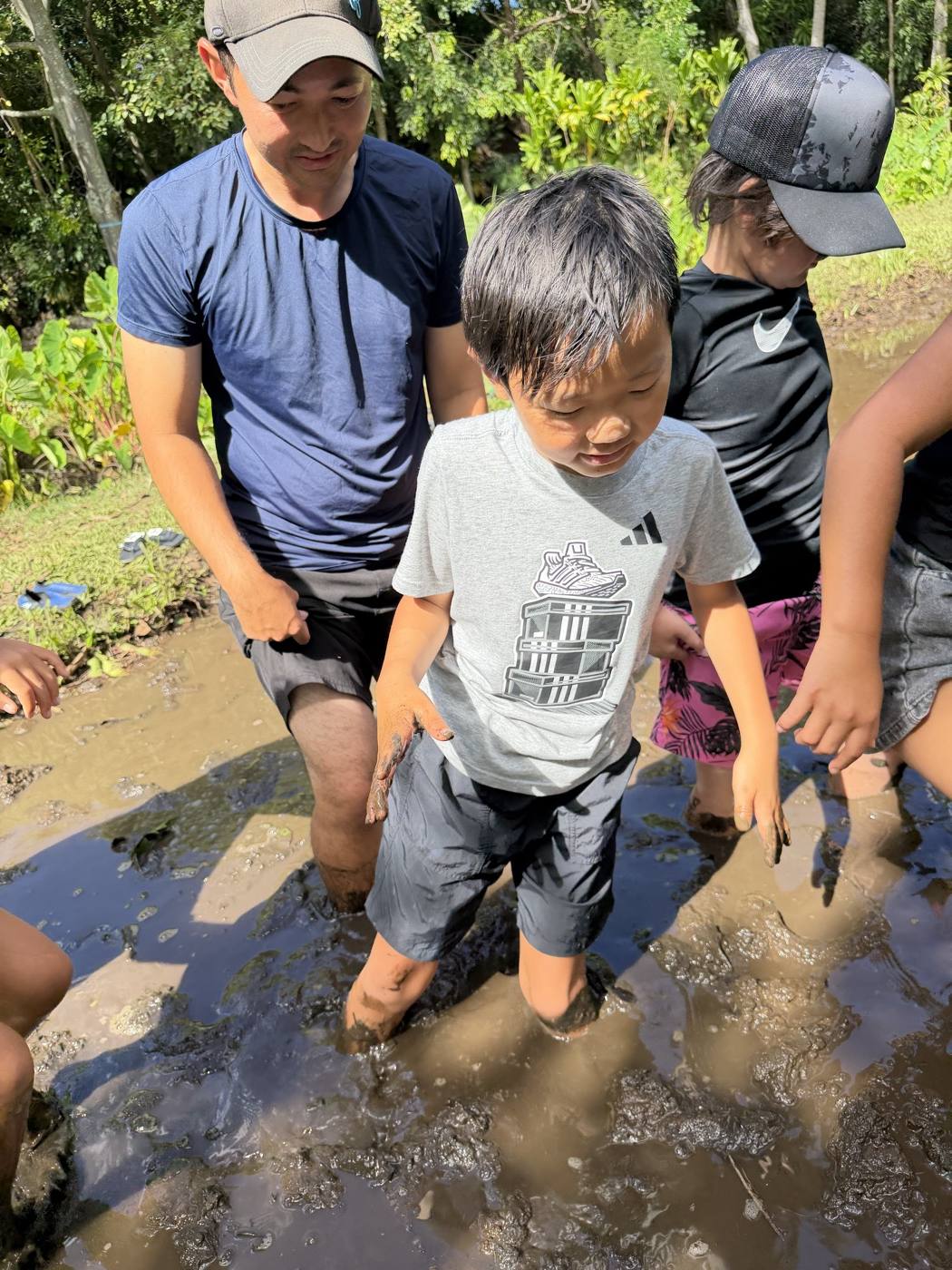
Real kalo (taro) patches on the University of Hawaiʻi at Mānoa campus. Stepping into water drawn from a Mānoa stream, kids learn firsthand about a food Hawaiians have long treasured and the system of water that sustains it.
At a glance
- How to join
- If your child is attending camp that day, they go with the group.No reservation needed. There is no extra charge.
- Ages
- Kids Program (ages 6–12) and Junior Program (ages 13–18)On morning field trips, Kids and Junior go together.
- Location
- On the University of Hawaiʻi at Mānoa campus, beside a Mānoa streamWe travel there from the school by car.
- Time
- Morning (leave school at 8:30 → taro patches → lunch)In the afternoon, Kids do one more activity at another spot and have English time in the classroom; Junior students have English class in the classroom.
- What to bring
- Clothes that can get dirty, flip-flops, hat, sunscreen, water bottleYounger children should also bring a change of clothes and a towel. We will send details in advance.
- Rainy days
- The taro patches are outdoors.Destinations and activities may change depending on the weather.
A day like this
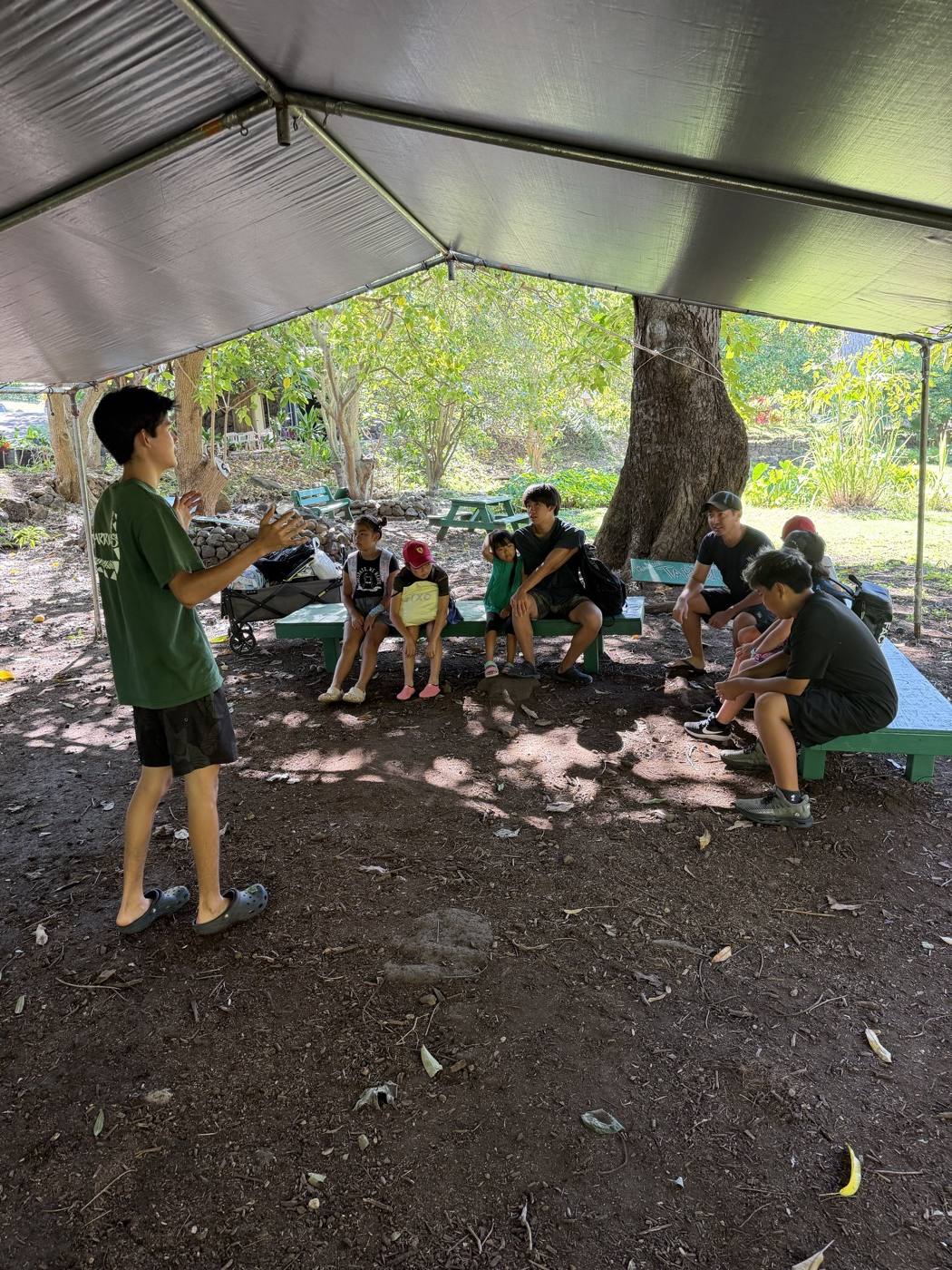
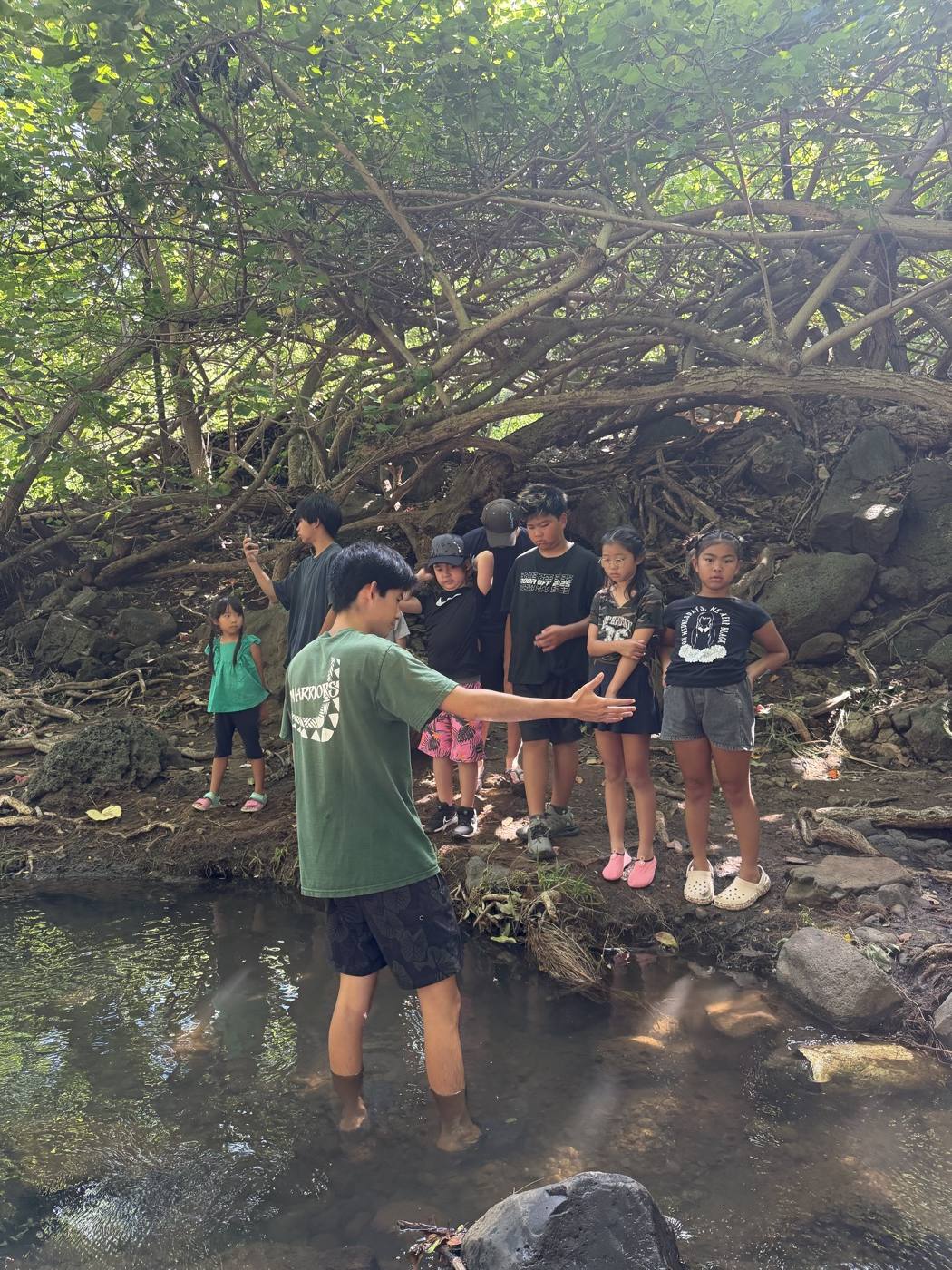
First, a talk about kalo and water
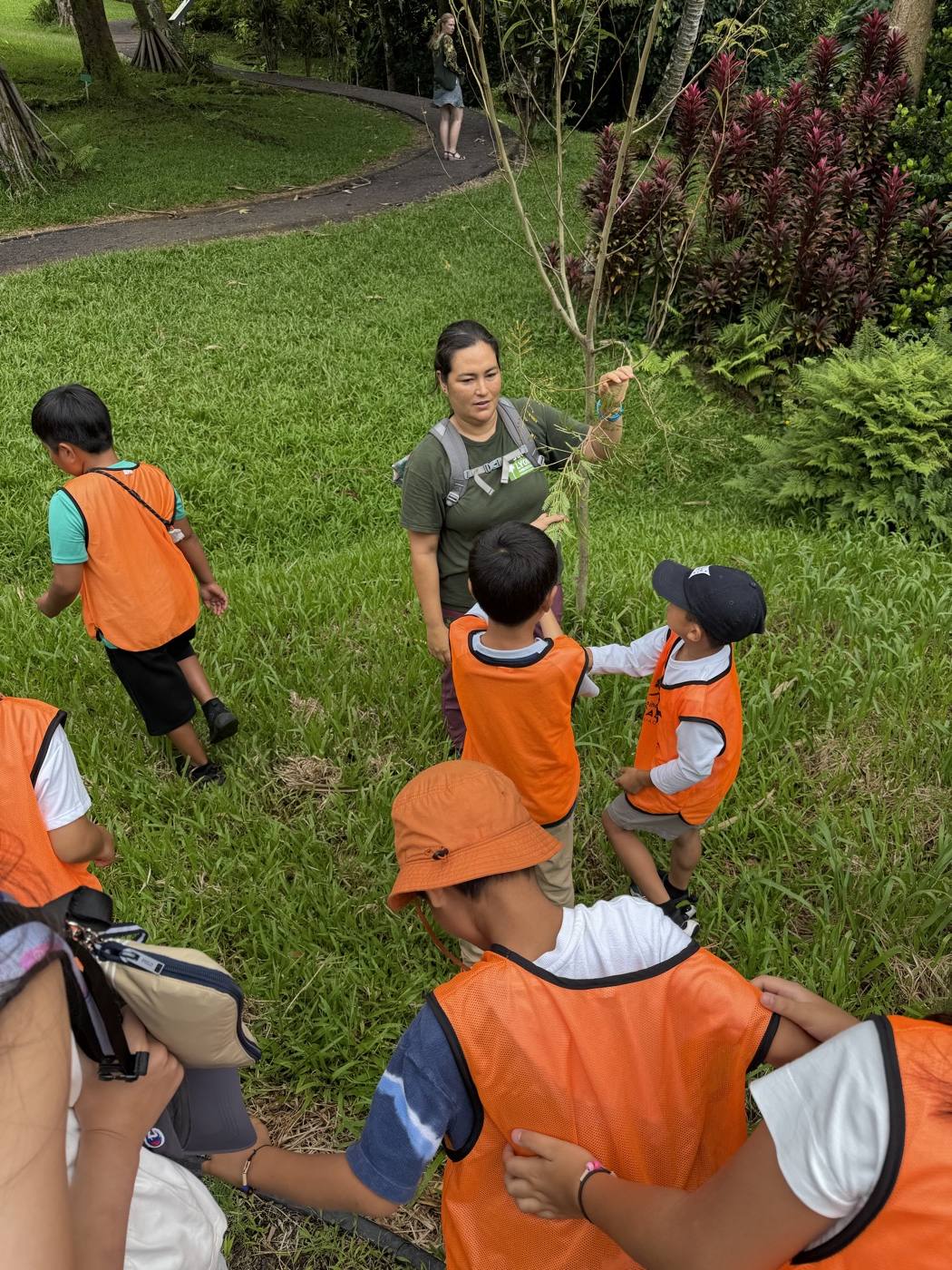
When we arrive, we listen to a talk in a tent in the shade. We learn what kind of food kalo (taro) is for Hawaiians, and about the ahupuaʻa way of thinking, which sees the land from the mountains to the sea as one. Then we go to see the ʻauwai, the channel that brings water from the stream to the patches.
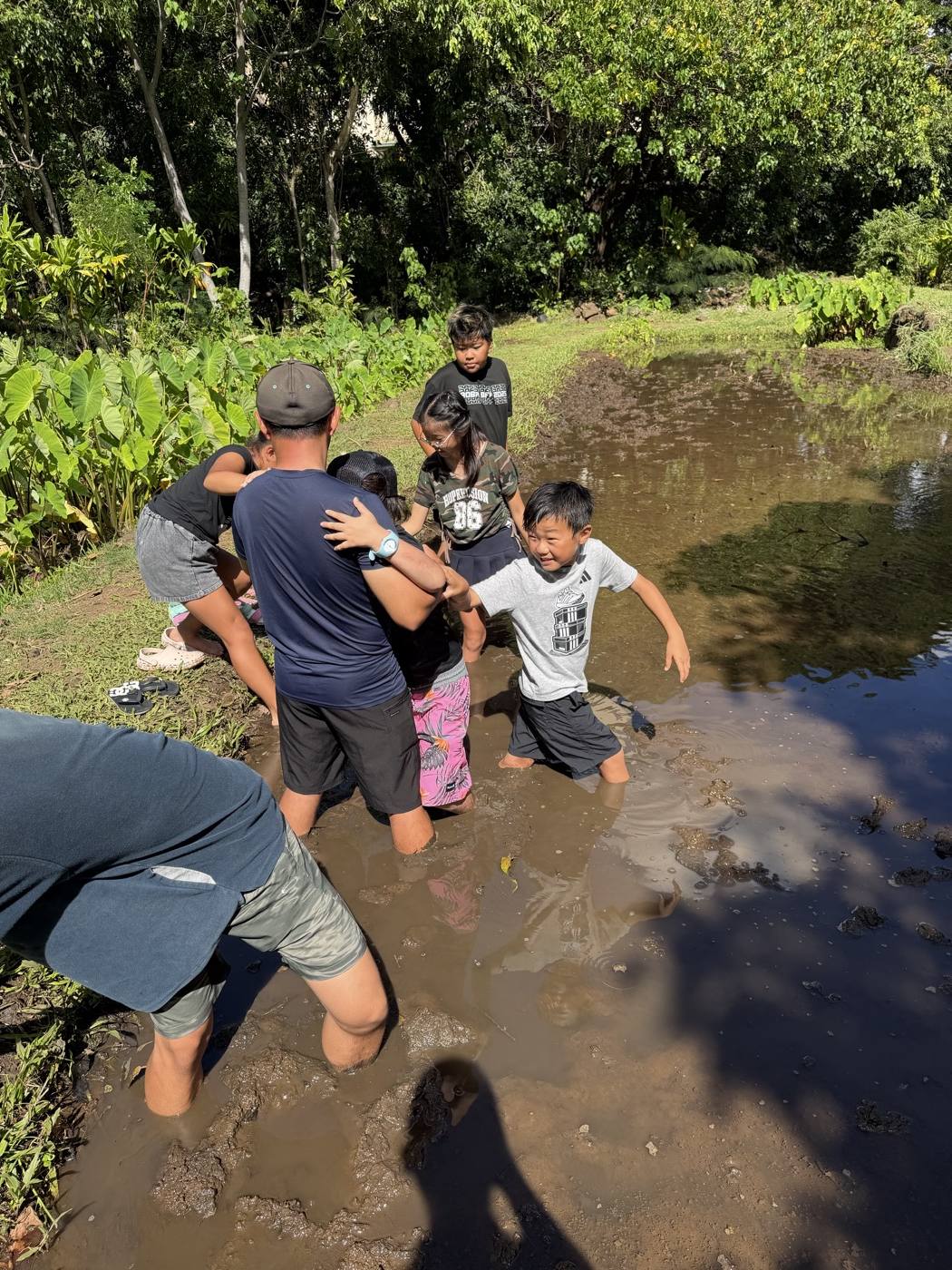
Stepping into the loʻi (taro paddy)
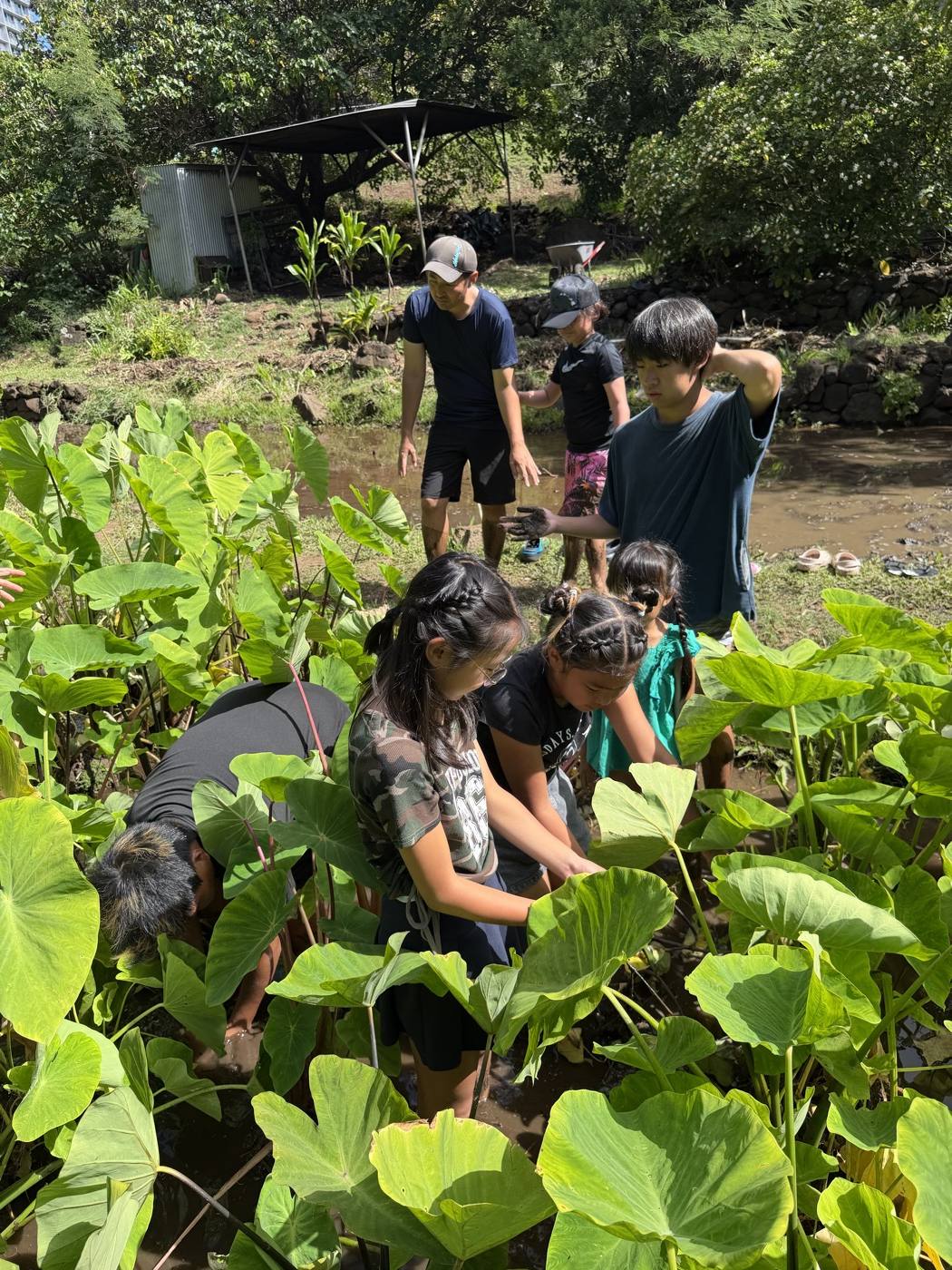
At last, into the patches! Stepping into the flooded loʻi feels cool and squishy. Kids may be hesitant at first, but it quickly turns into laughter. They pull weeds and help clean the channel, getting a small taste of farm work.
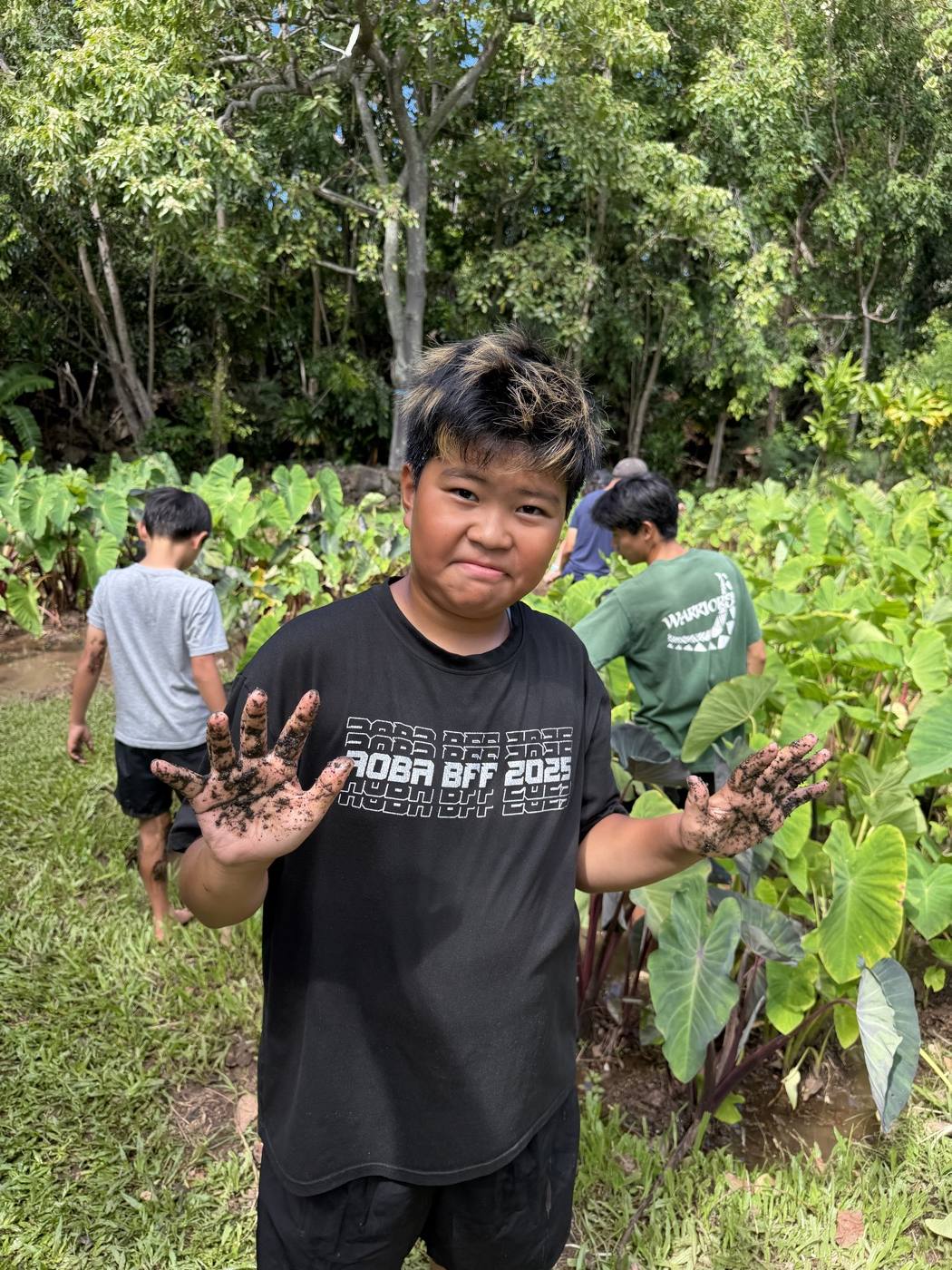
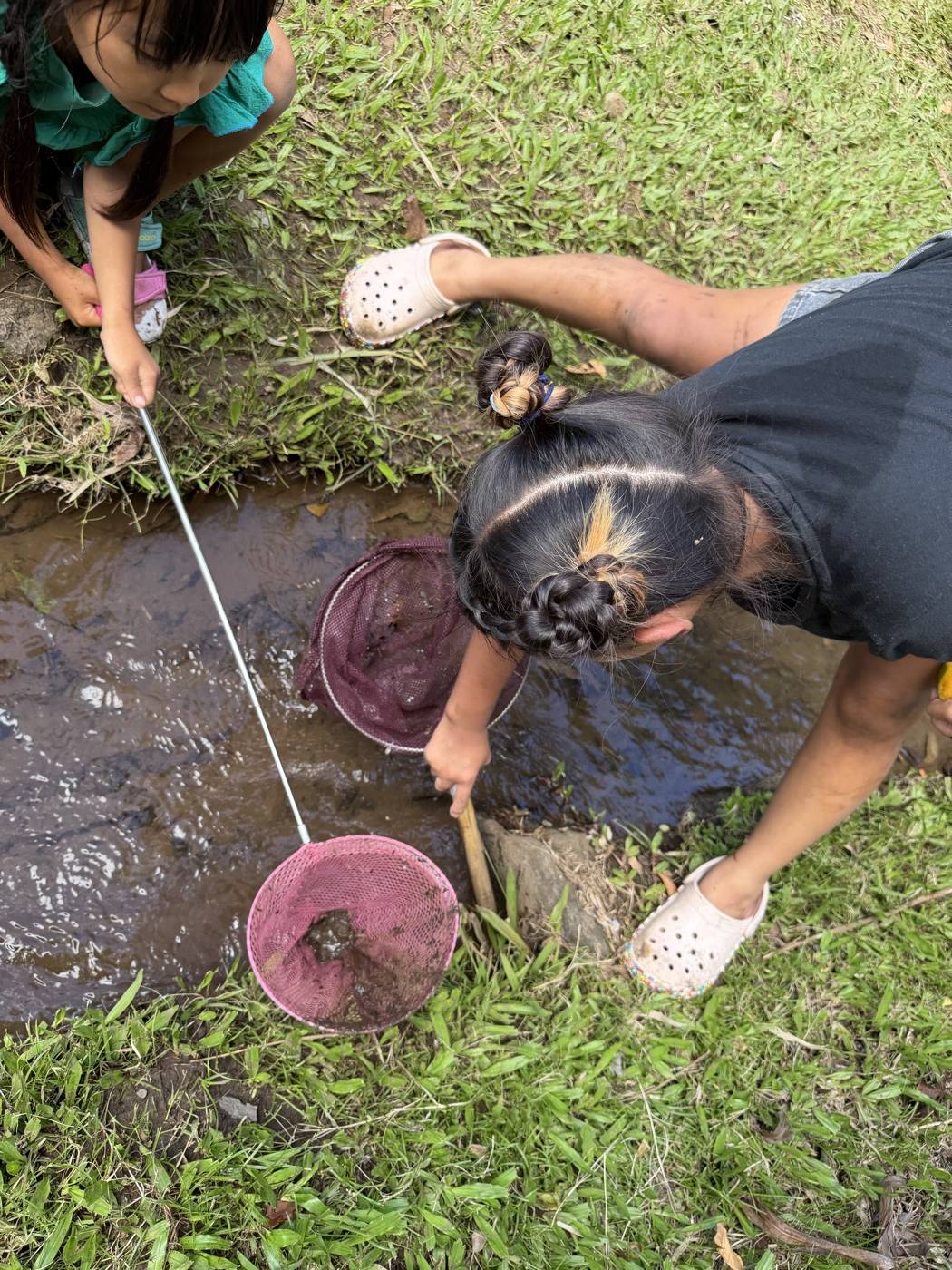
Big leaves and a Mānoa stream
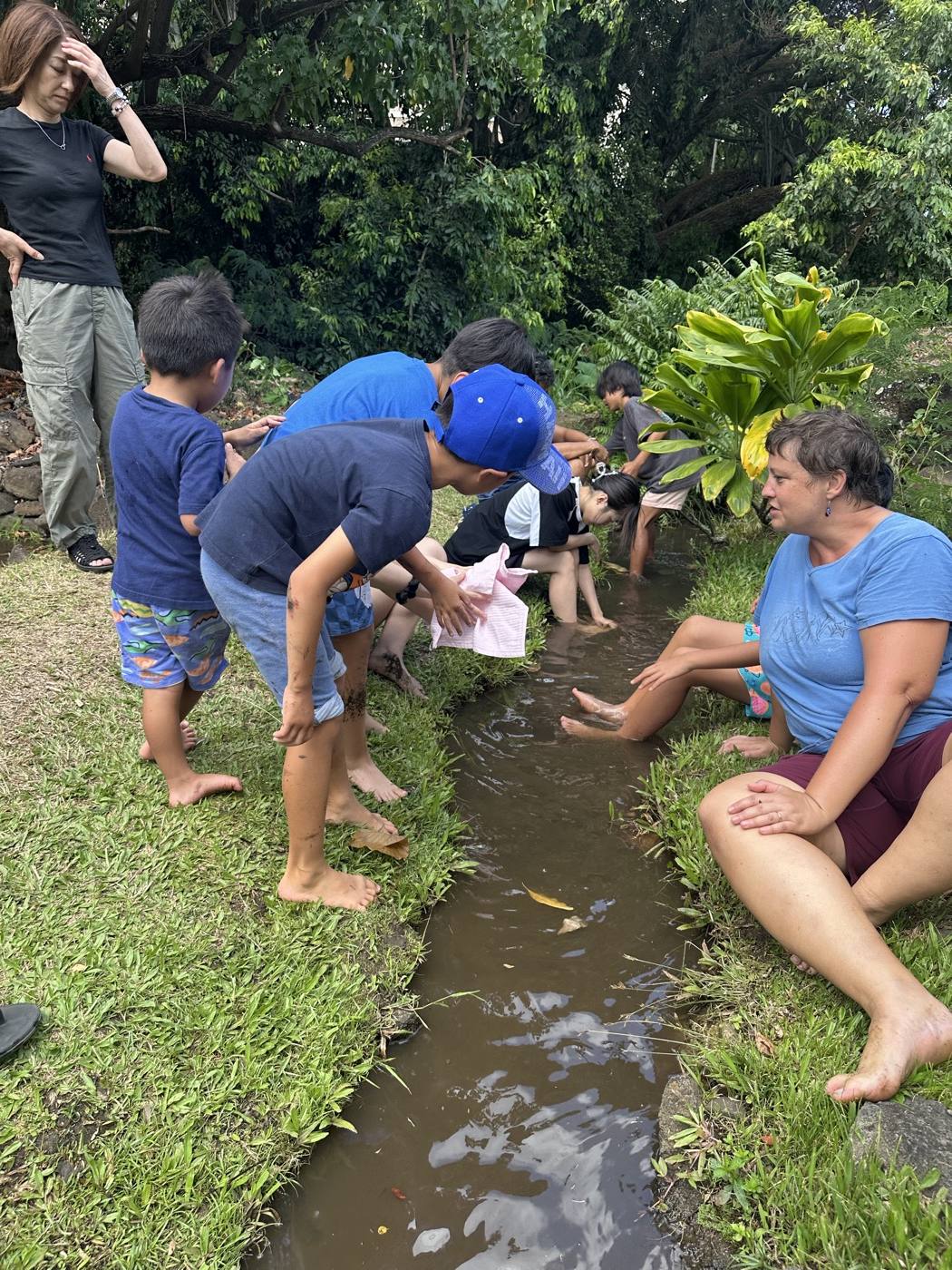
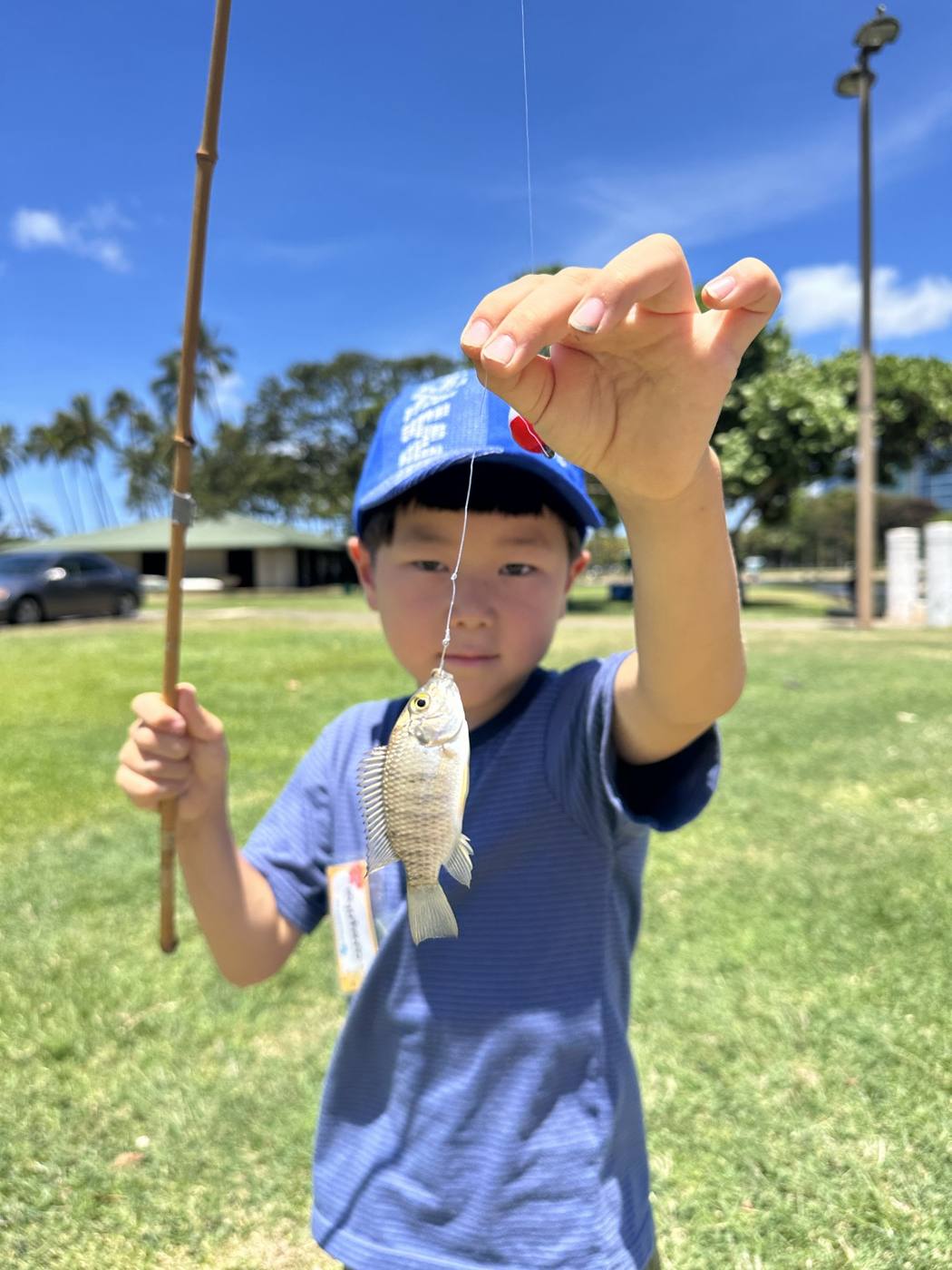
Walking among kalo leaves almost as tall as the kids, they learn which parts are eaten: the leaves, the stems, or the roots. Finally, we go to the Mānoa stream that carries water to the patches. With nets in hand, the kids searched for creatures in the water.
One more stop in the afternoon, then a wrap-up in the classroom
In the afternoon, Kids go to one more place (a park, the library, etc.), then spend about the last hour in the classroom. They look back on what they saw and touched in the taro patches by talking about it in English and writing in their journals. Junior students go back to school for level-based English classes and a group lesson just for camp students.
Let’s try saying it in English on the day
Photos
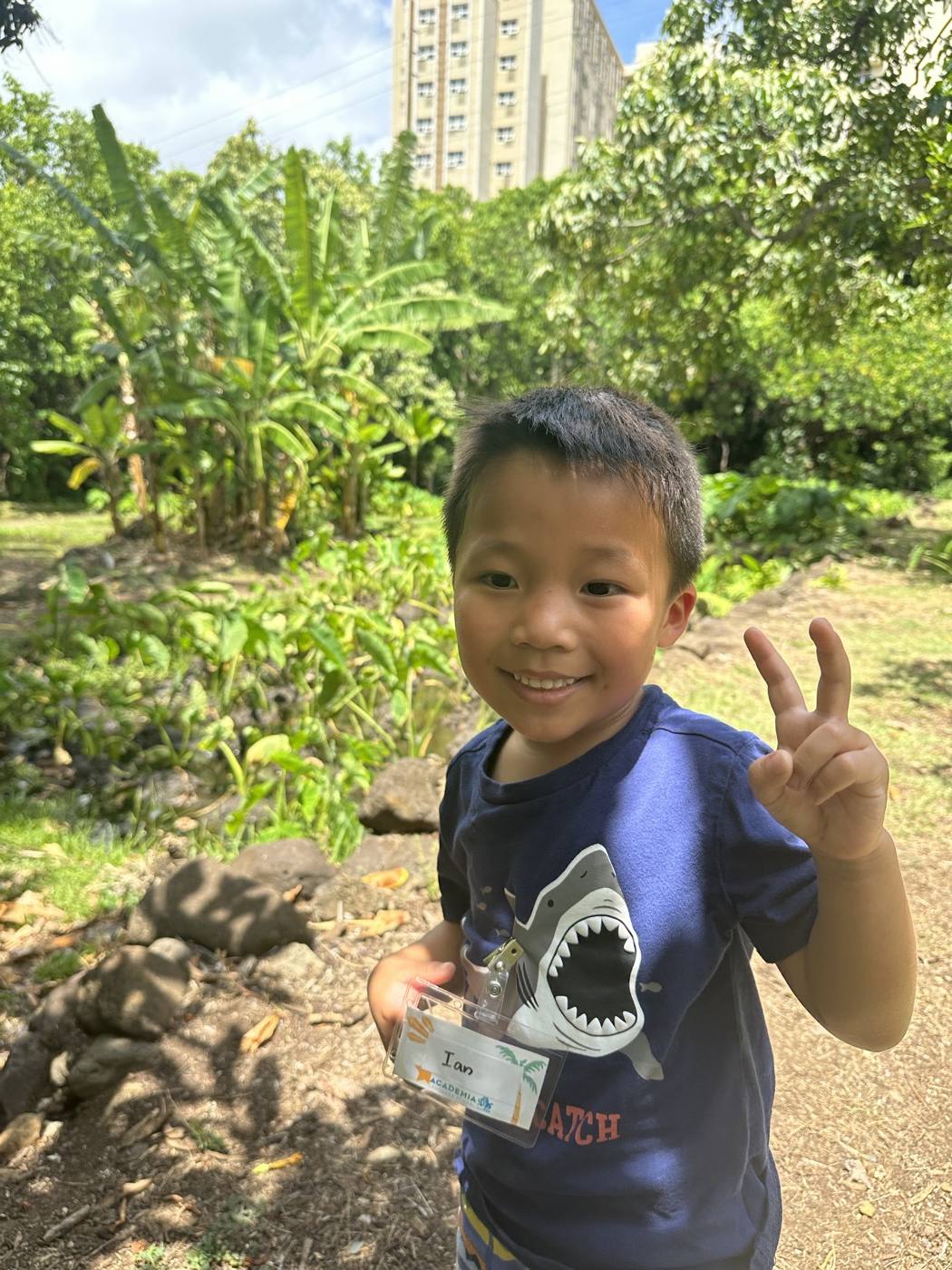
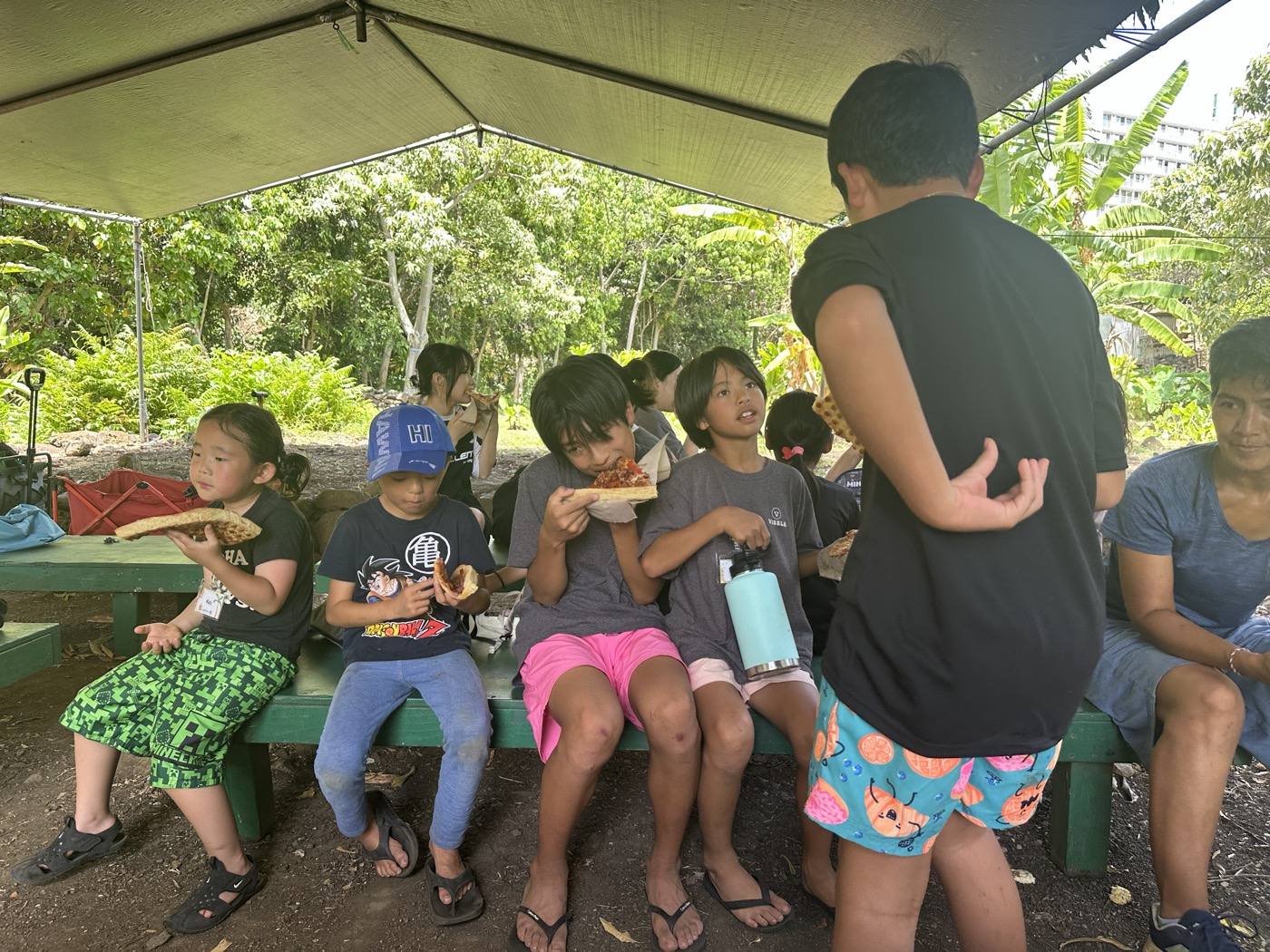
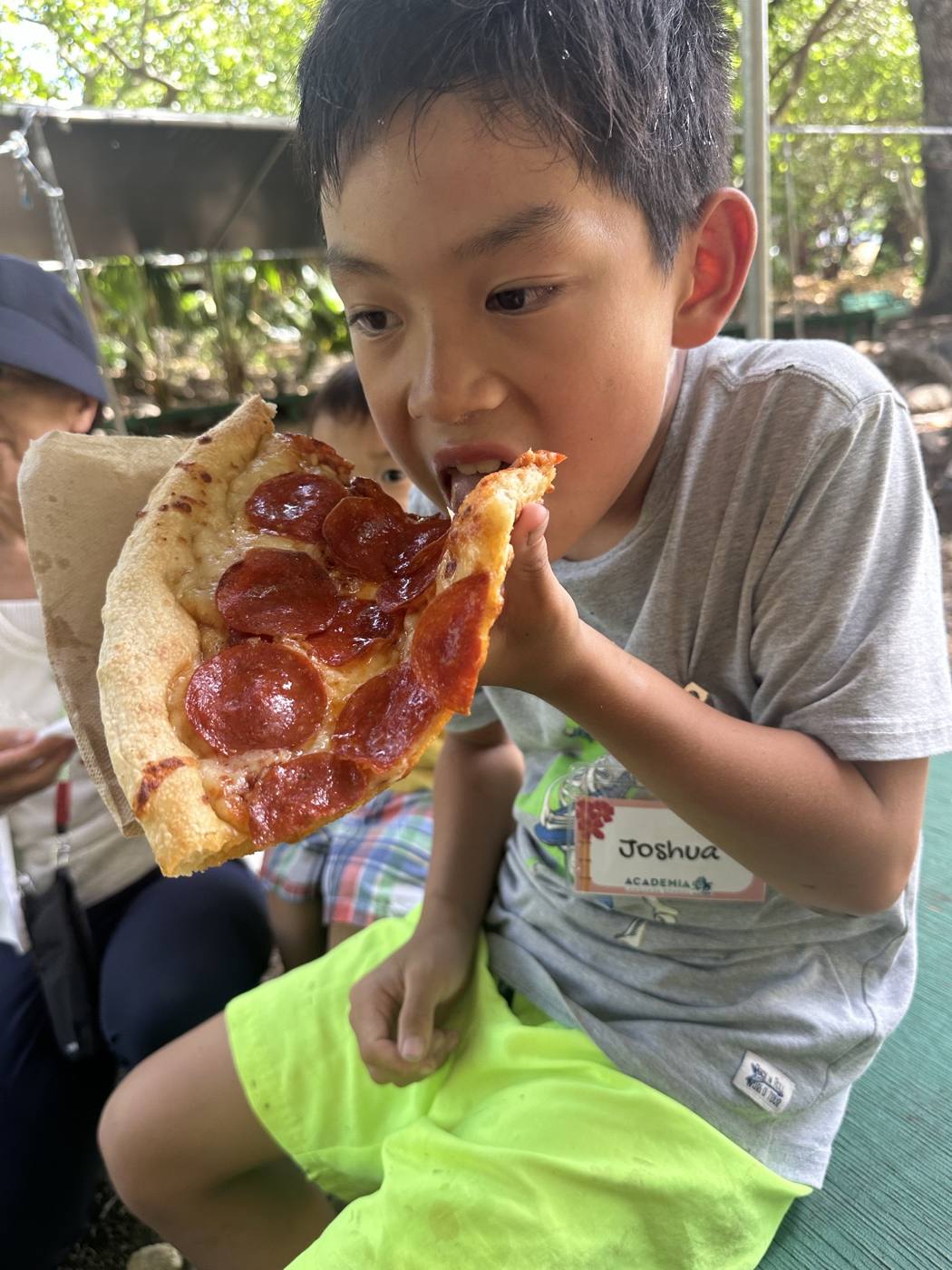
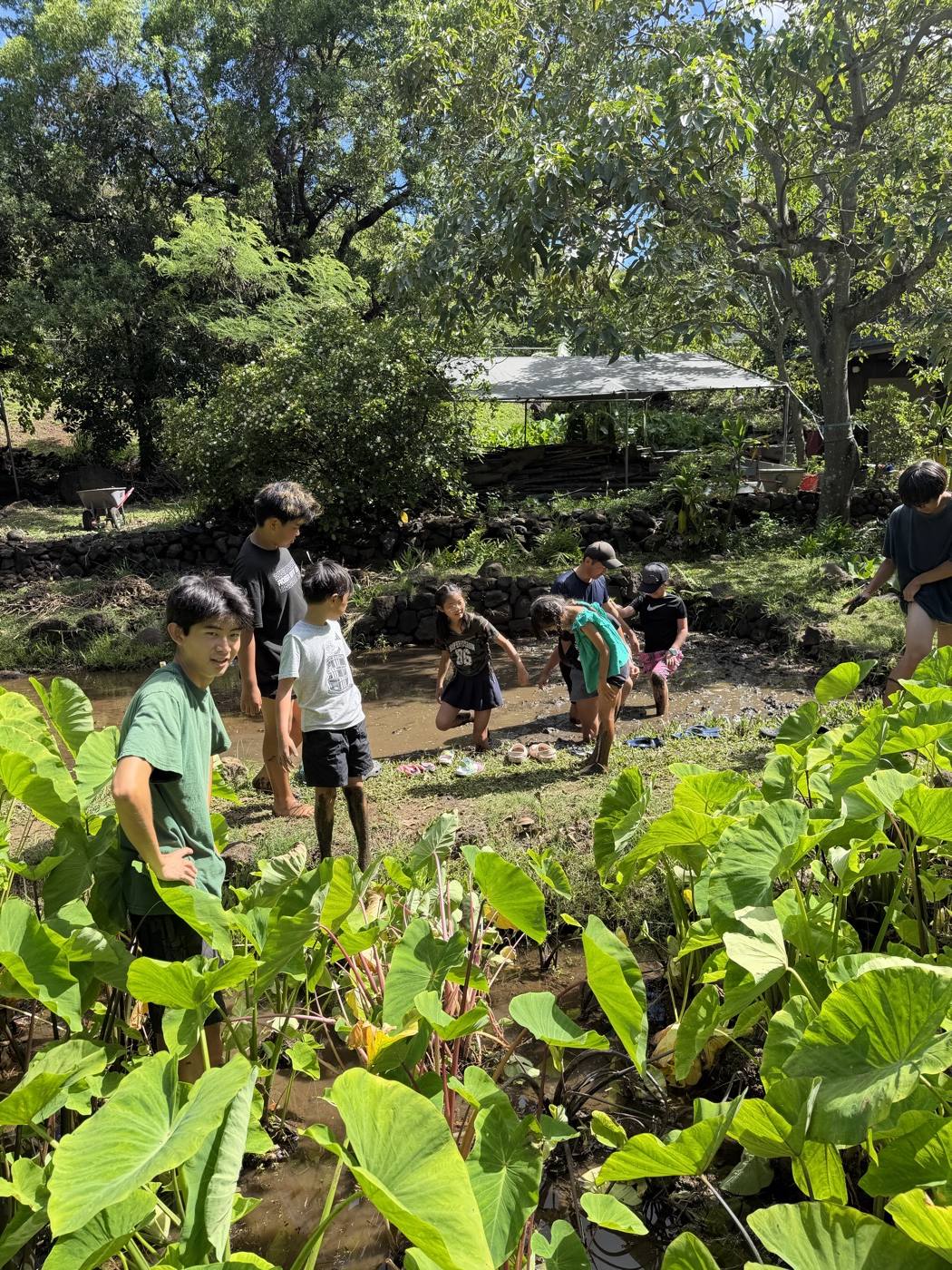
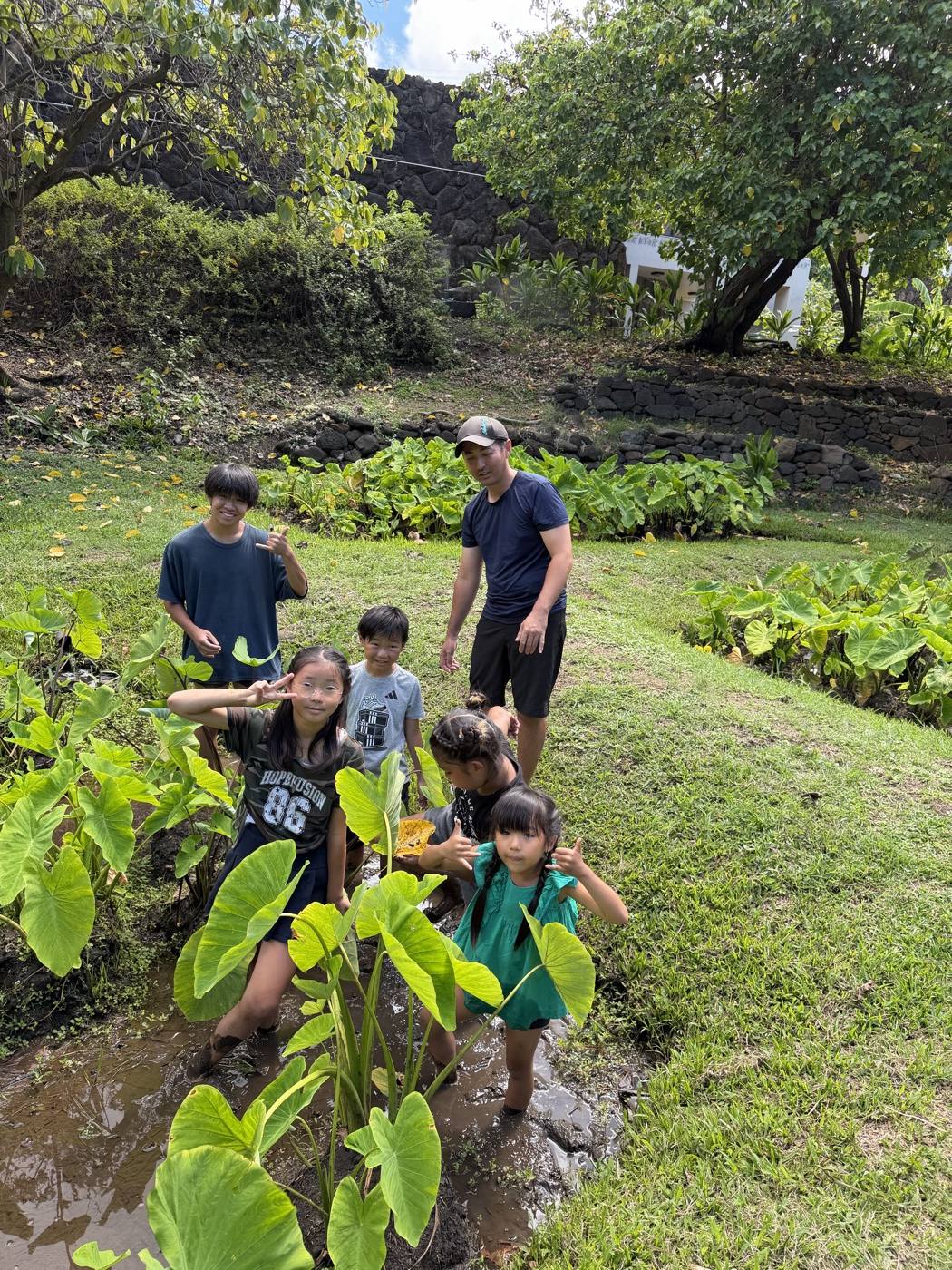
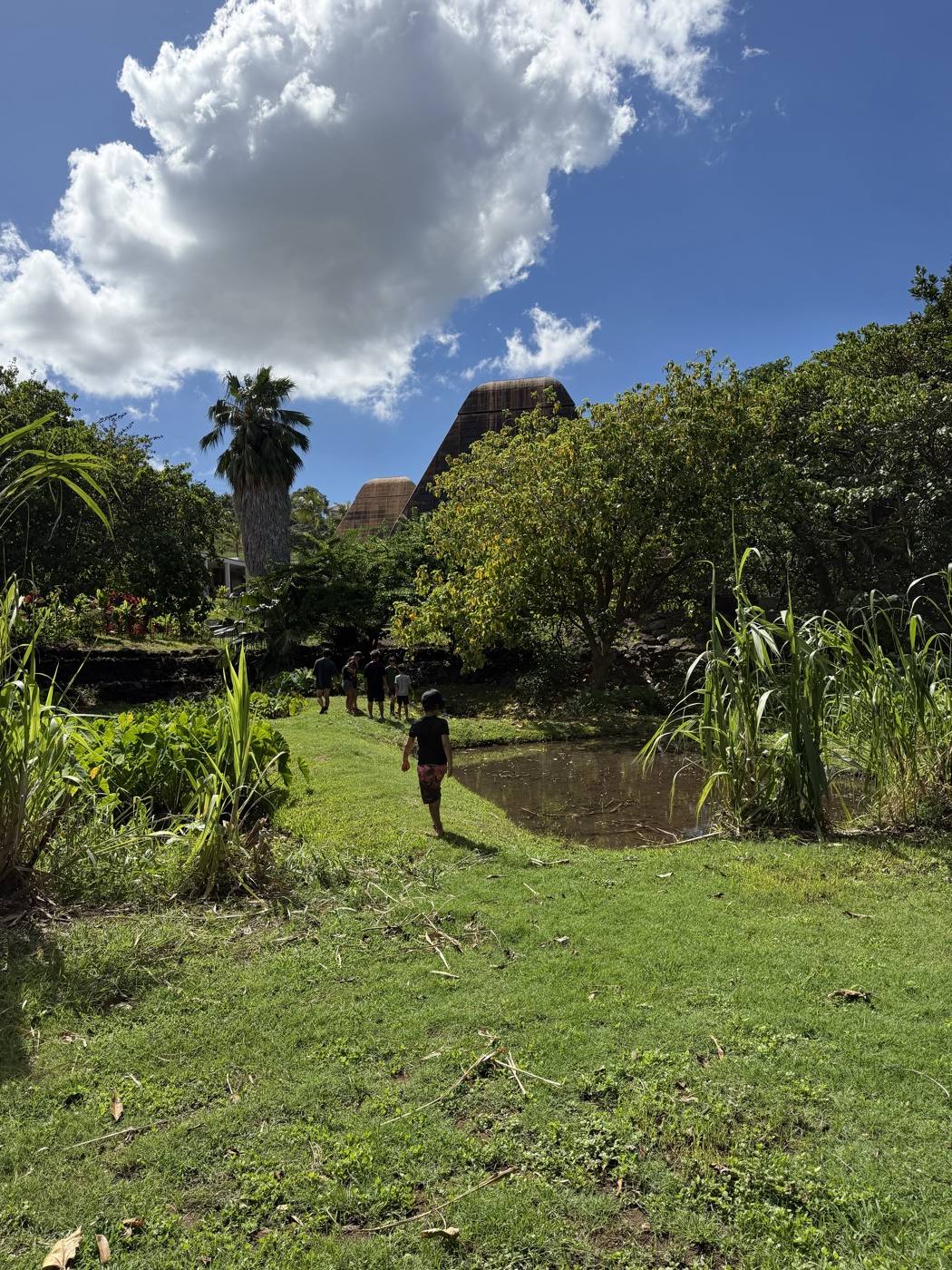
Taken at Aloha Camp in Summer 2025, Spring 2026, and Summer 2026
For kids, for parents
For kids
The feel of mud, cold water, leaves bigger than you. A day to play without worrying about dirty clothes, the closest you can get to Hawaiʻi’s nature.
For parents
Kids learn, by moving their bodies, the ways of thinking about food, water, and land that Hawaiians have passed down. It’s time to touch, with hands and feet, a culture that’s hard to convey through words alone.
- Clothes and shoes will get muddy. Please come in things that can get dirty.
- Under the rules of the taro patches, a parent consent form may be required to participate. We will let you know in advance if it is needed.
- Destinations and activities may change depending on the weather or the site’s schedule.
Seasons with this activity
We visited in Summer 2025
July 30, 2025
We visited twice in Summer 2026
Week 2 (July 29) and Week 5 (August 20)
We’ll announce spring and summer destinations as soon as they’re set
The spring session runs March 22 – April 2, and the summer session runs July 19 – August 20.
Videos
Other activities
Join Aloha Camp
A program in Hawaiʻi where kids ages 6 to 18 learn English during spring break (March) and summer break (July–August). Mornings are field trips, and afternoons are age-appropriate activities and English classes, so kids learn English while having fun.